REFUEL CHARGING DOCK
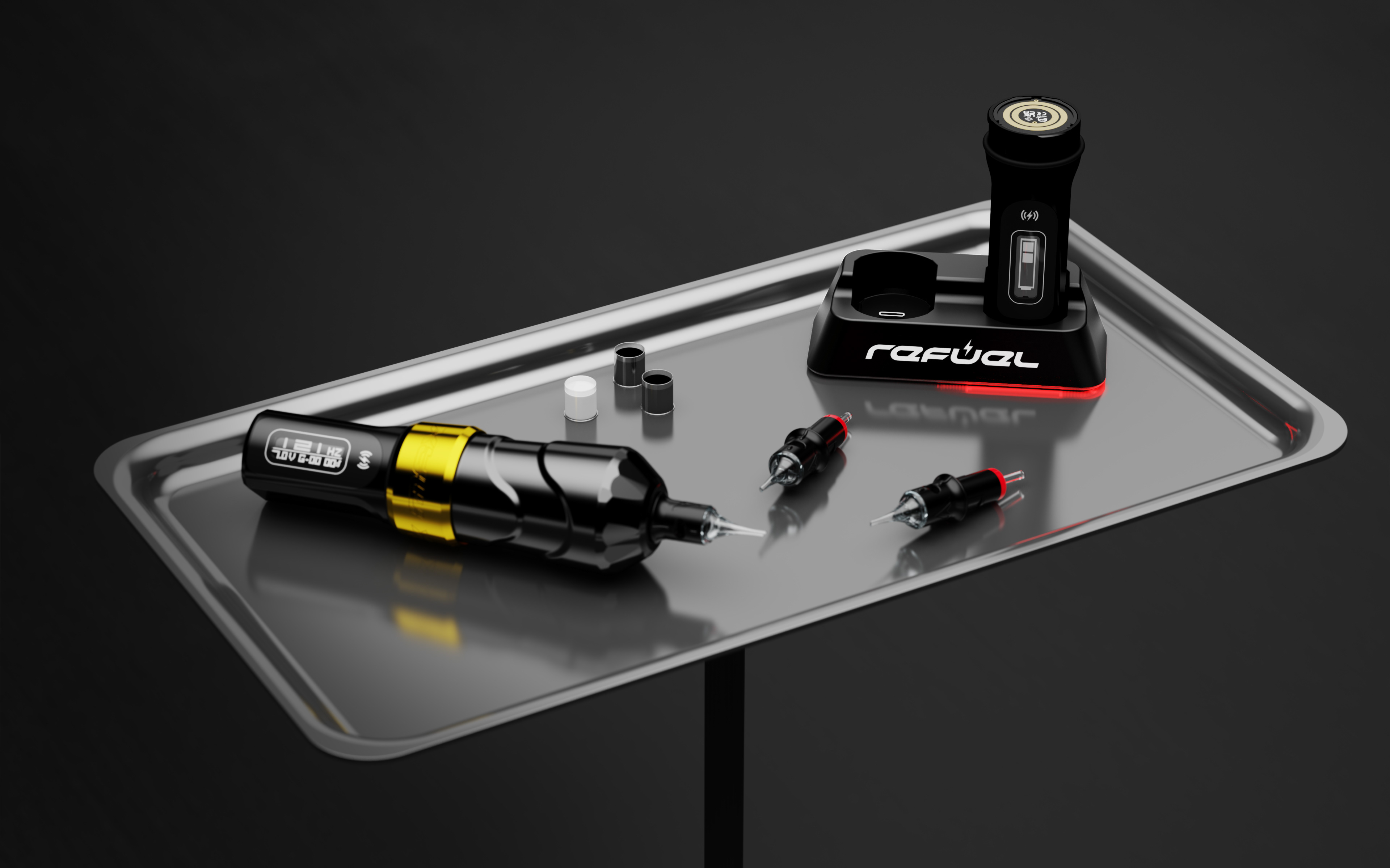
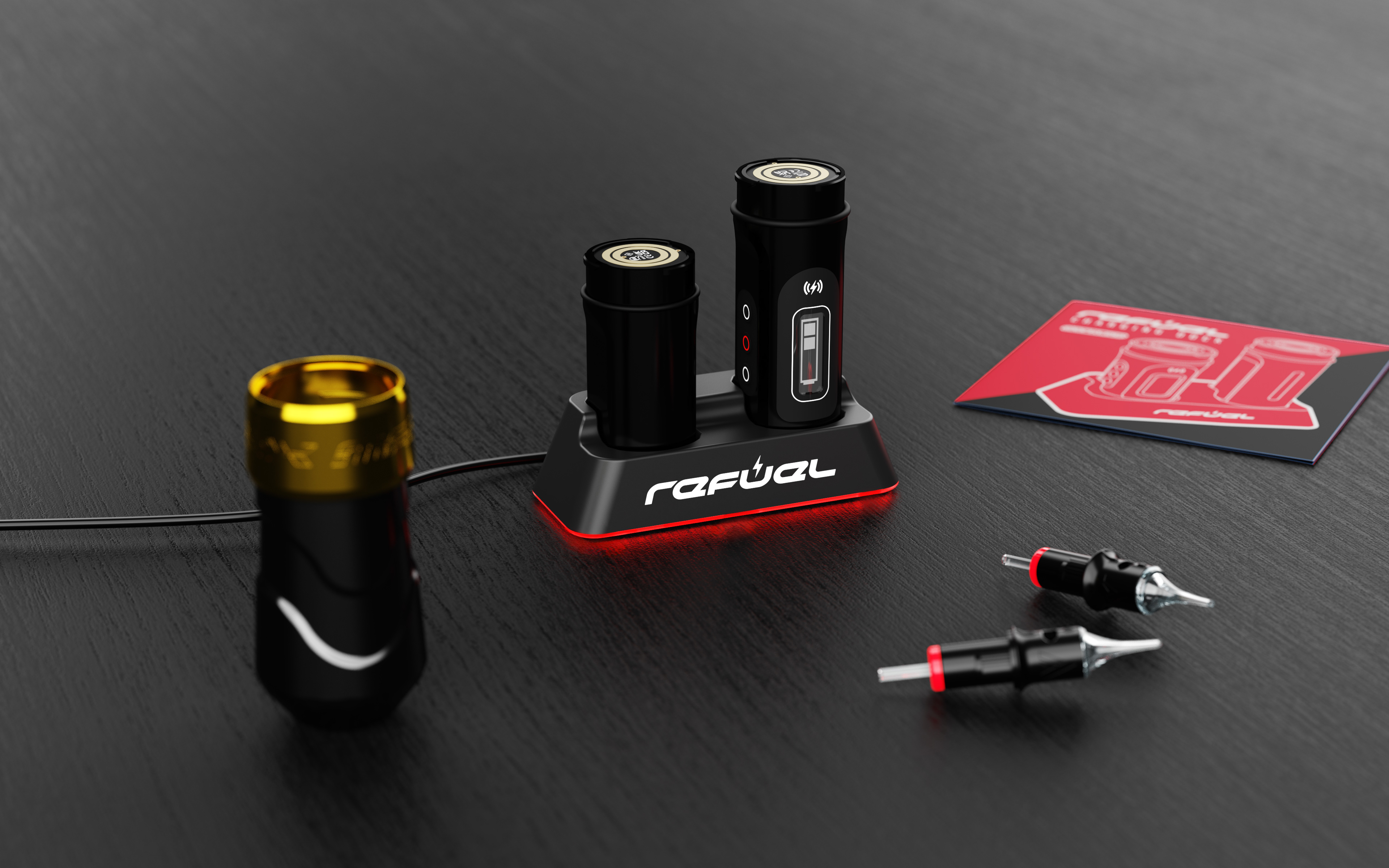
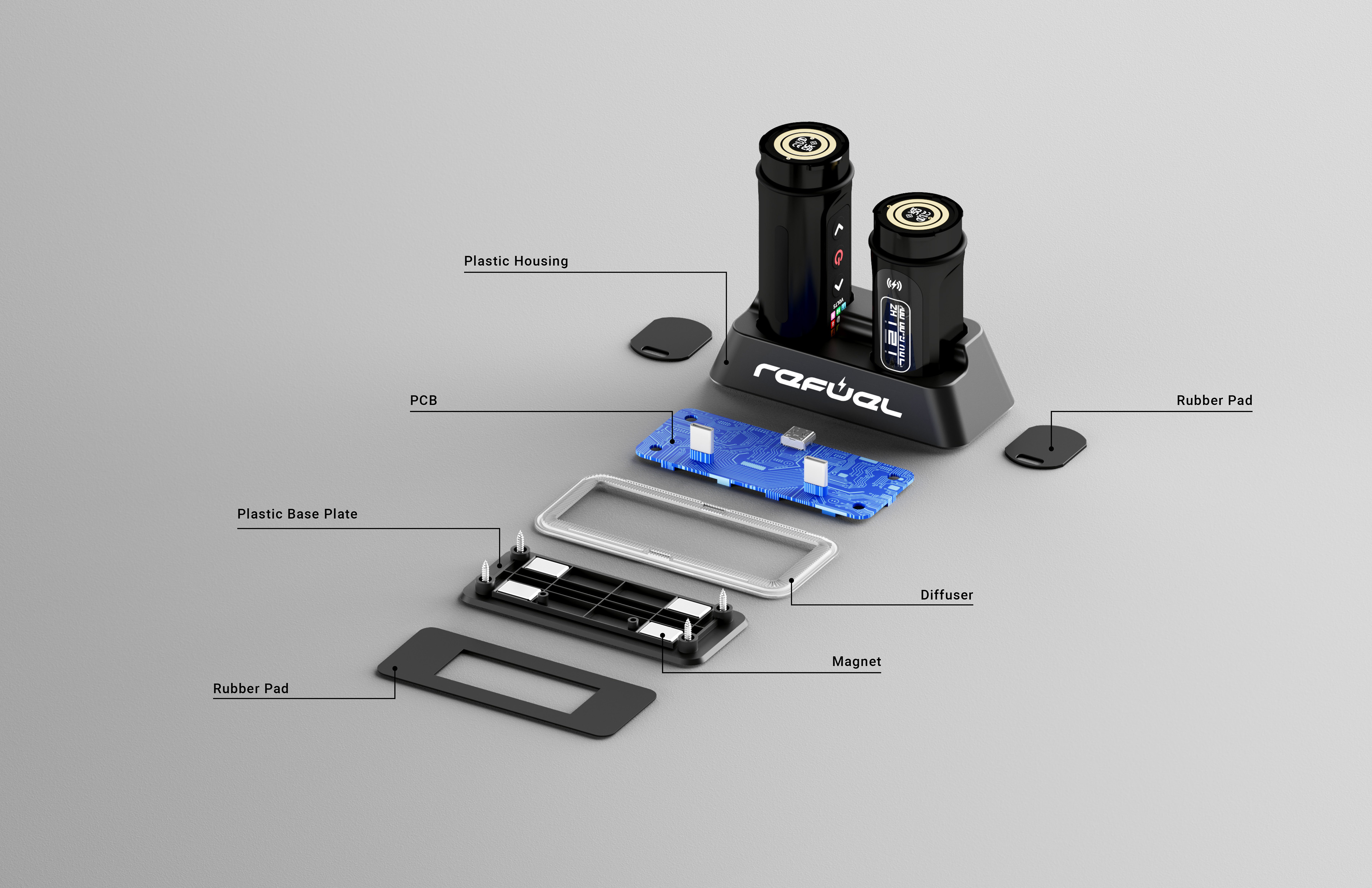
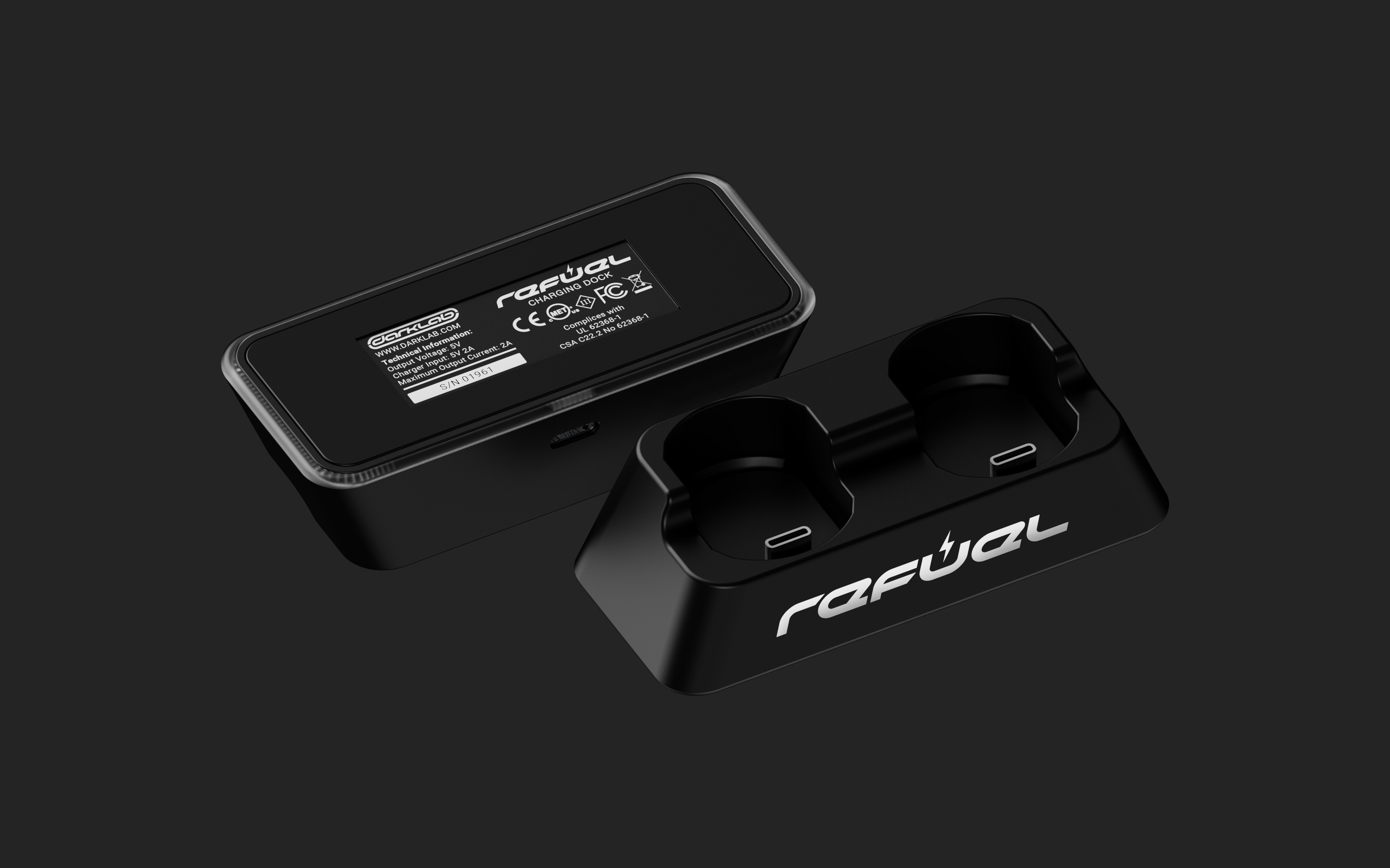
Power up your next tattoo session with the FK Iron's Refuel Charging Dock. This charging dock ensures all your PowerBolt battery packs are always primed for action. Capable of simultaneously powering up two PowerBolts, this dock is an indispensable asset for extended sessions at the studio or other busy events. While one PowerBolt is in use, the others are ready at a moments notice, ensuring a seamless workflow during long tattoo sessions. Featuring magnets and an anti- slip rubber base, this dock ensures you can freely charge your battery packs anywhere you go. The Refuel Charging Dock also comes complete with LED indicators, offering a red light during the charging process and a green light when you've reached full charge. The central design challenge was building a single dock that worked cleanly across two generations of the PowerBolt, each with a different interface, which shaped the form and drove the decision to integrate the light matrix directly into the dock.
The product is currently in production and is for sale on FK Irons' website here.
Engineering Team: Fernando Diaz & Christian Bonomo
Role:
Market Research
Industrial Design
Design Strategy
Design for Manufacturing
Product Visualization
Packaging
The Opportunity:
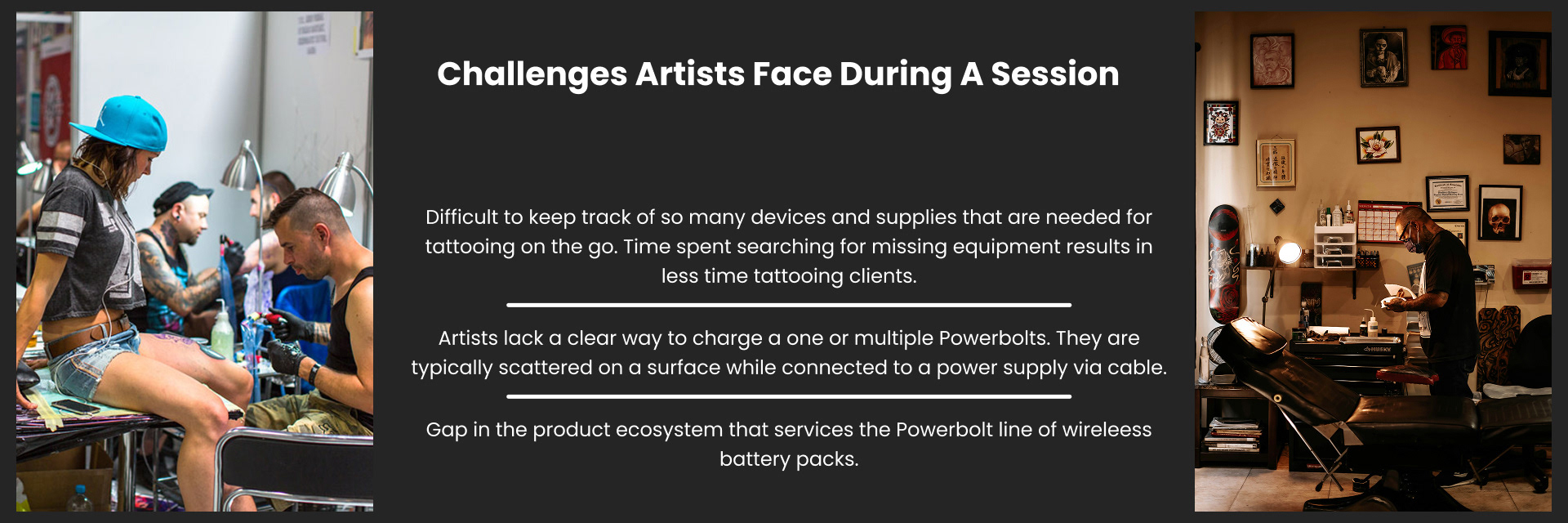
The opportunity surfaced on the convention floor, not in a brief. Walking a show in Nashville, FK Irons ProTeam artists were visibly struggling with machines, cables, and PowerBolt battery packs scattered across cramped booths with no dedicated way to charge them. Some ran extension cords with multiple PowerBolts daisy-chained in; others leaned on generic portable power banks. Batteries got scratched, rolled off sanitized trays, or went missing, and a dead battery mid-session meant lost time and a less professional setup in front of a paying client. The PowerBolt line had never had a real charging solution, and the workaround artists had settled for didn't match the intentionality of the rest of the FK ecosystem. This left a functional gap and a brand opportunity sitting in plain sight on a surface that stays visible to clients all session long.
The Opportunity:
The form followed a hard constraint rather than an aesthetic one: two PowerBolt generations with fundamentally different interfaces including a light matrix on the original PB and PB+, a screen on the PBII and PBII+. All of which needed to read cleanly from a single dock. That constraint drove the defining move, a split light matrix built into the dock itself so charge status is legible regardless of which generation is docked, alongside a front-face cut that keeps the PBII's screen unobstructed while giving the profile a deliberate sense of direction. Magnets and an anti-slip base let the dock anchor to the metal surgical trays artists already work on, turning a convention-floor pain point into a piece of hardware that completes the ecosystem.
Gap In The Ecosystem
Attending a tattoo convention is a unique and chaotic experience. Thousands of people arrive over a weekend to get tattooed while artists work to grow their reputations and showcase their skills. One day, while walking the rows of a convention in Nashville, I noticed many of the FK Irons ProTeam artists struggling with cramped booths with machines, equipment, and cables scattered everywhere. Many travel with multiple machines to stay prepared for whatever piece comes their way while attending these shows. What surprised me most, was that they had no effective way to charge their Powerbolt battery packs. Some ran an extension cord with multiple PowerBolts plugged in; others relied on a portable power supply. The result was the same with PowerBolts scattered across surfaces, getting scratched, rolling off sanitized trays, or going missing entirely. The consequences went beyond clutter because a dead or missing battery means reduced session time, interrupted flow, and a less professional setup in front of a client.


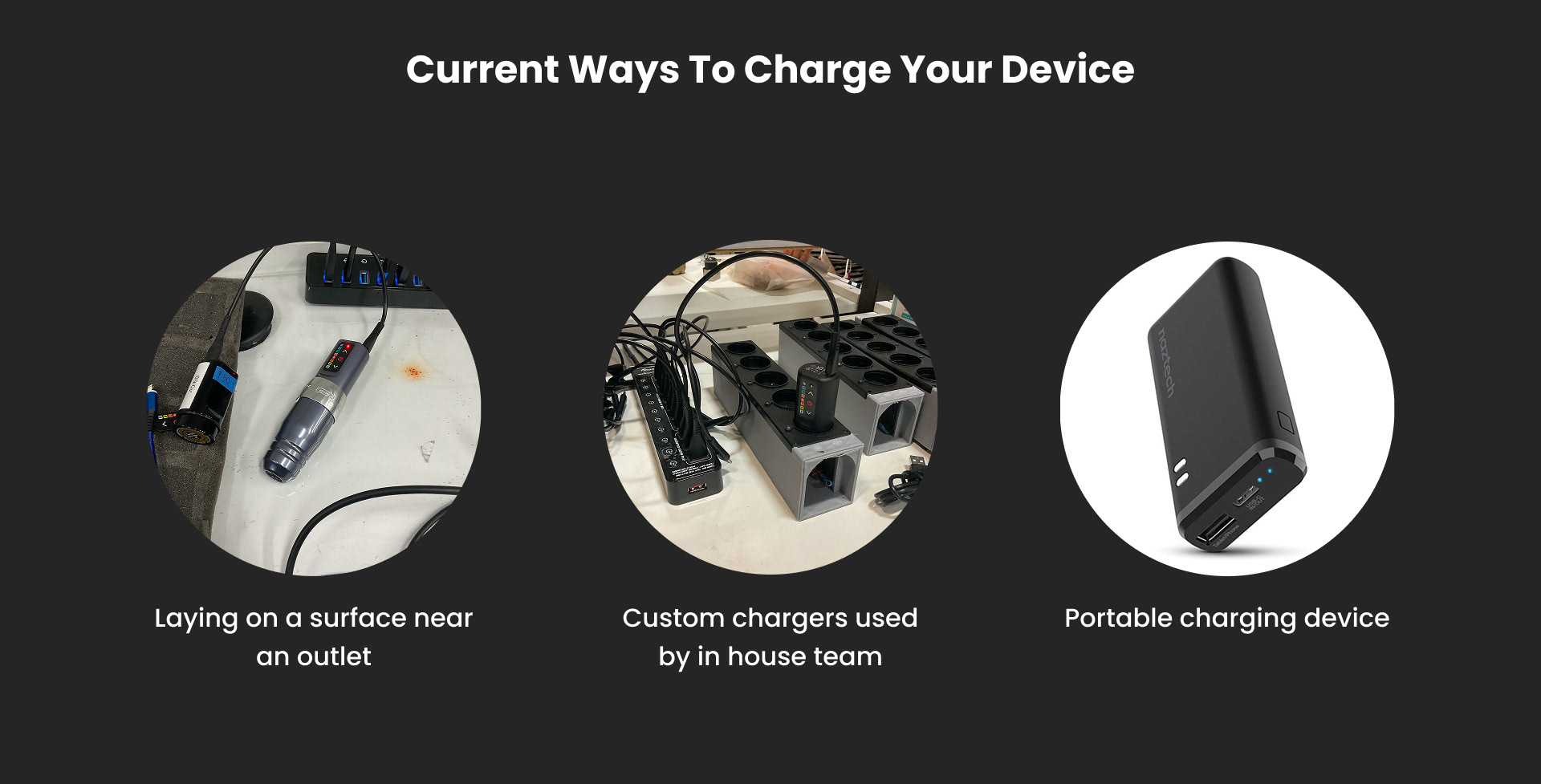
The PowerBolt had no dedicated charging solution for their premium tattoo machine. Artists were left improvising with USB cables and generic power banks. I was a workaround that felt inconsistent with the quality and intentionality of the rest of the line. Beyond the functional problem, there was a real brand opportunity. A charging dock lives on the work surface all session long, visible to clients, fellow artists, and anyone walking the convention floor. It was a chance to complete the collection and give artists the necessary tools to create works of art.
Designing For Two Generations of Powerbolts
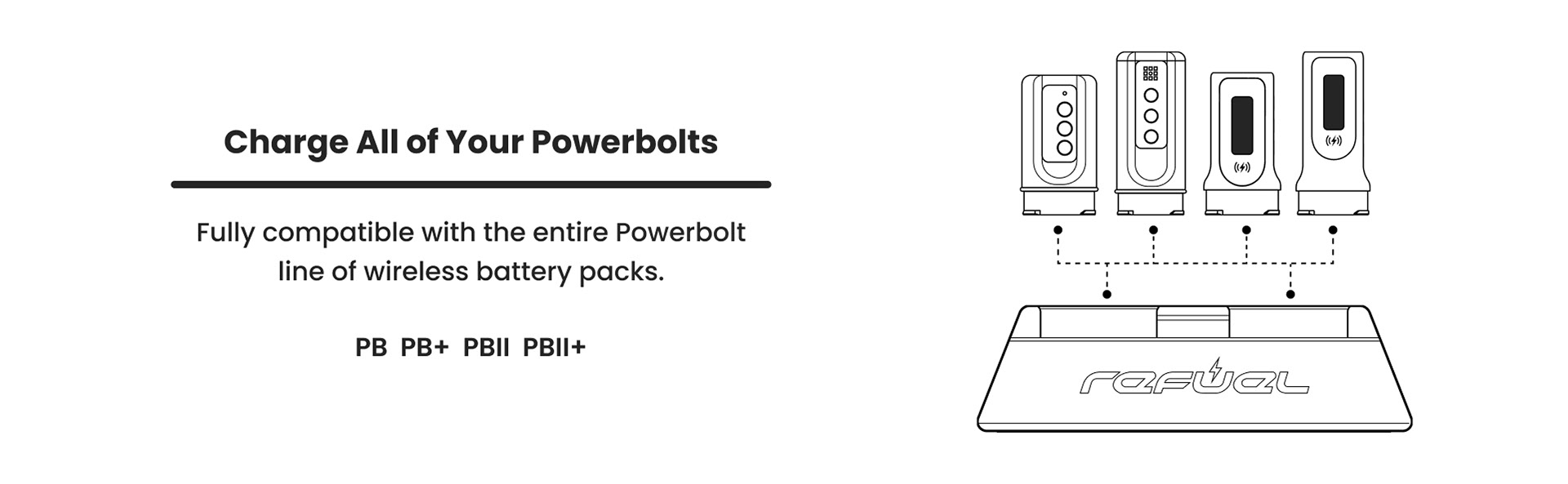
The Refuel's form started with a constraint rather than an aesthetic direction. The PowerBolt line spans two generations with fundamentally different interfaces with the original PB and PB+ use a light matrix while the PBII and PBII+ feature a screen. To unify the experience across both generations, a light matrix was built into the dock itself, giving artists one consistent read on charge status regardless of which PowerBolt was in use. The last detail came from the idea that tattoo artists work on metal surgical trays and use mechanic , so magnets were added to the base to let the Refuel anchor to any metal surface and stay exactly where it was put.
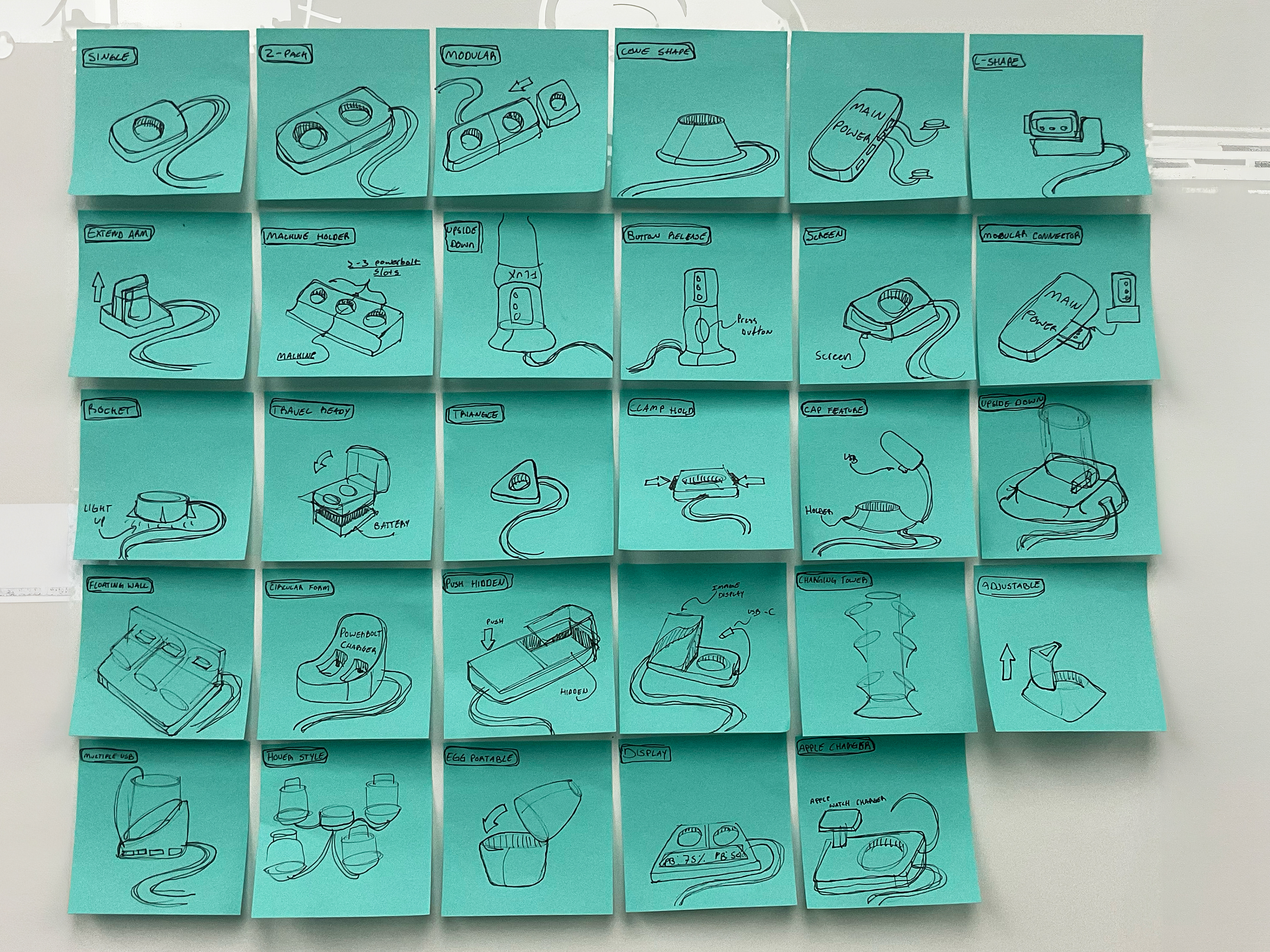
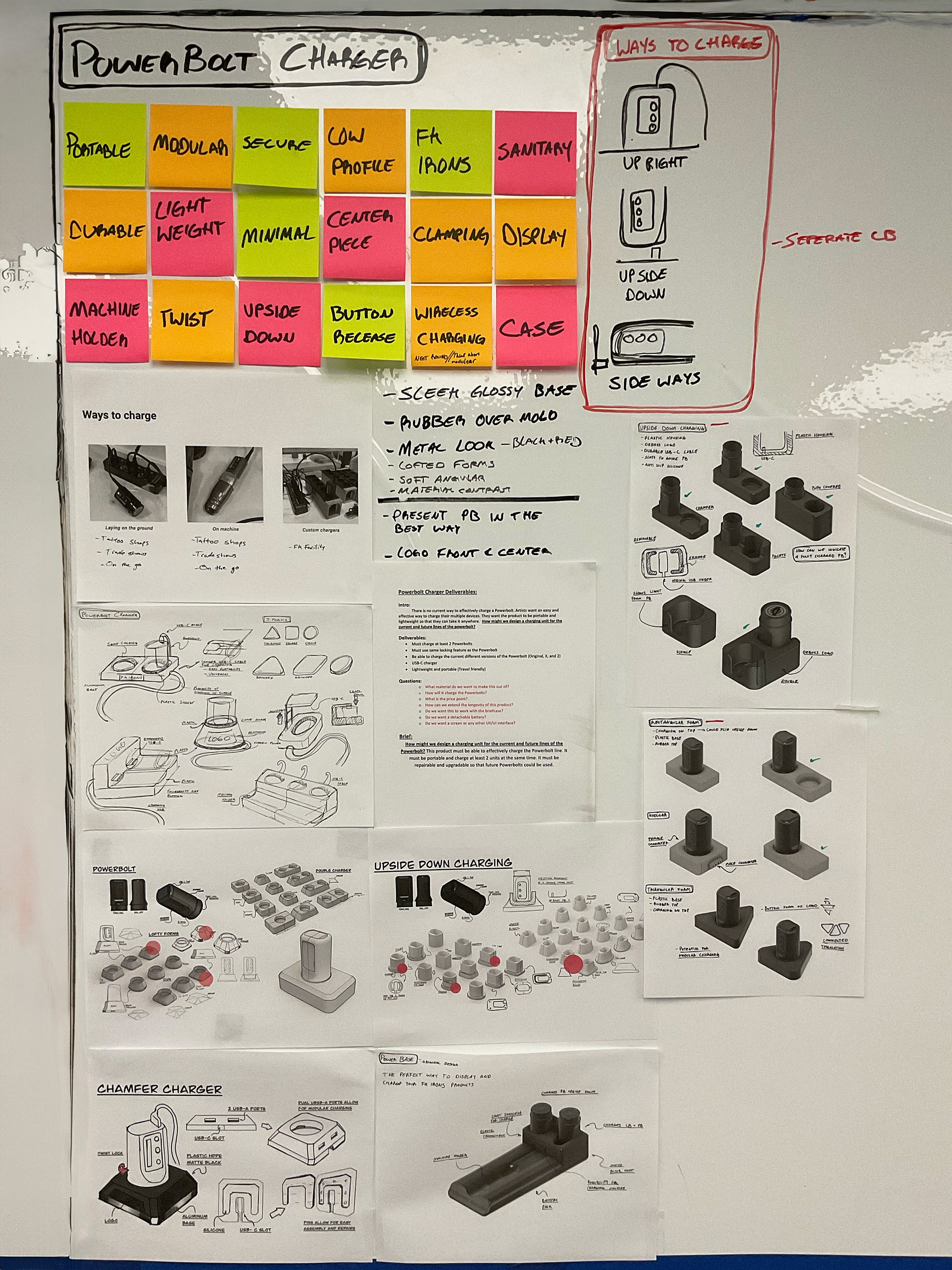
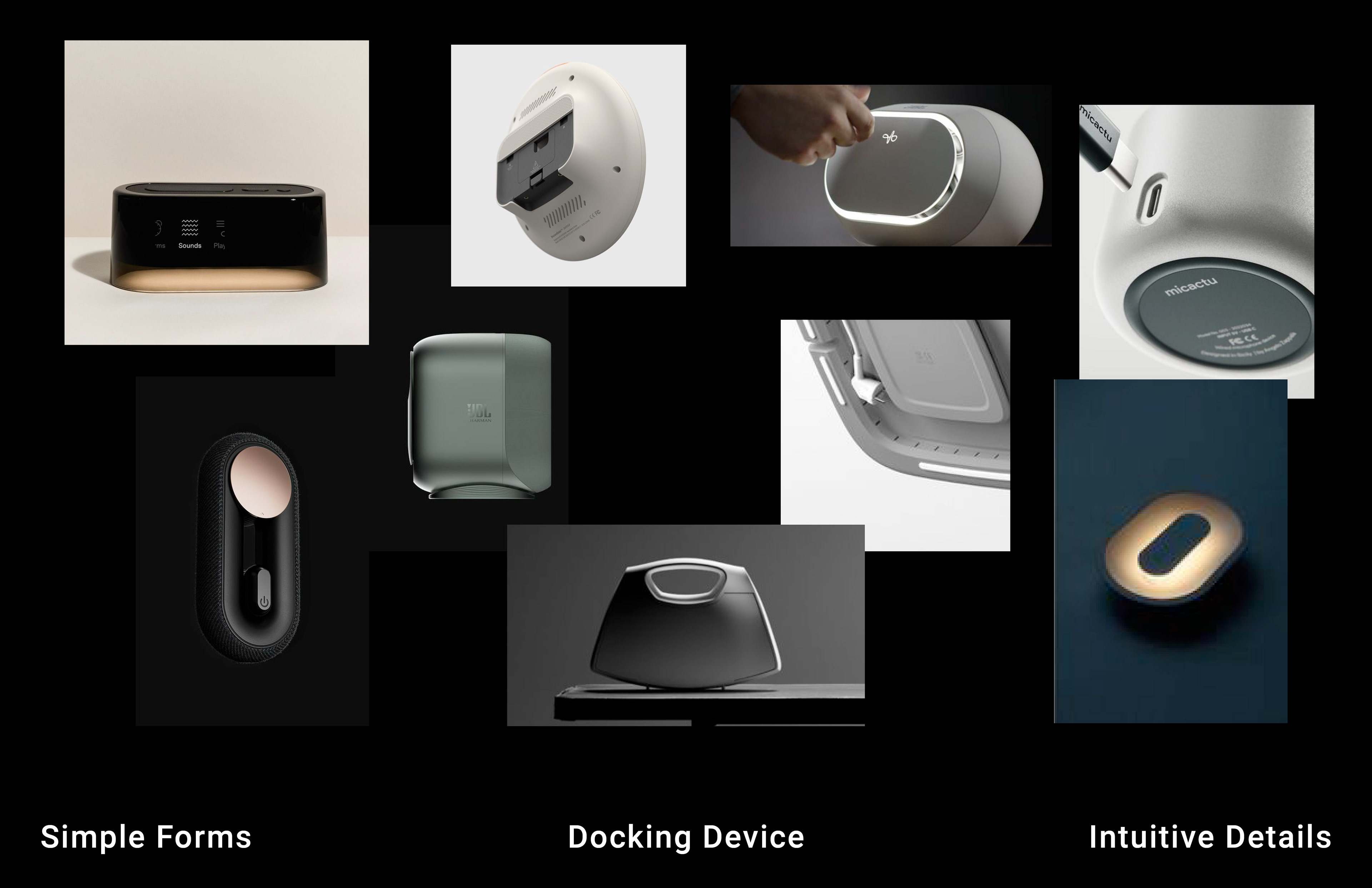
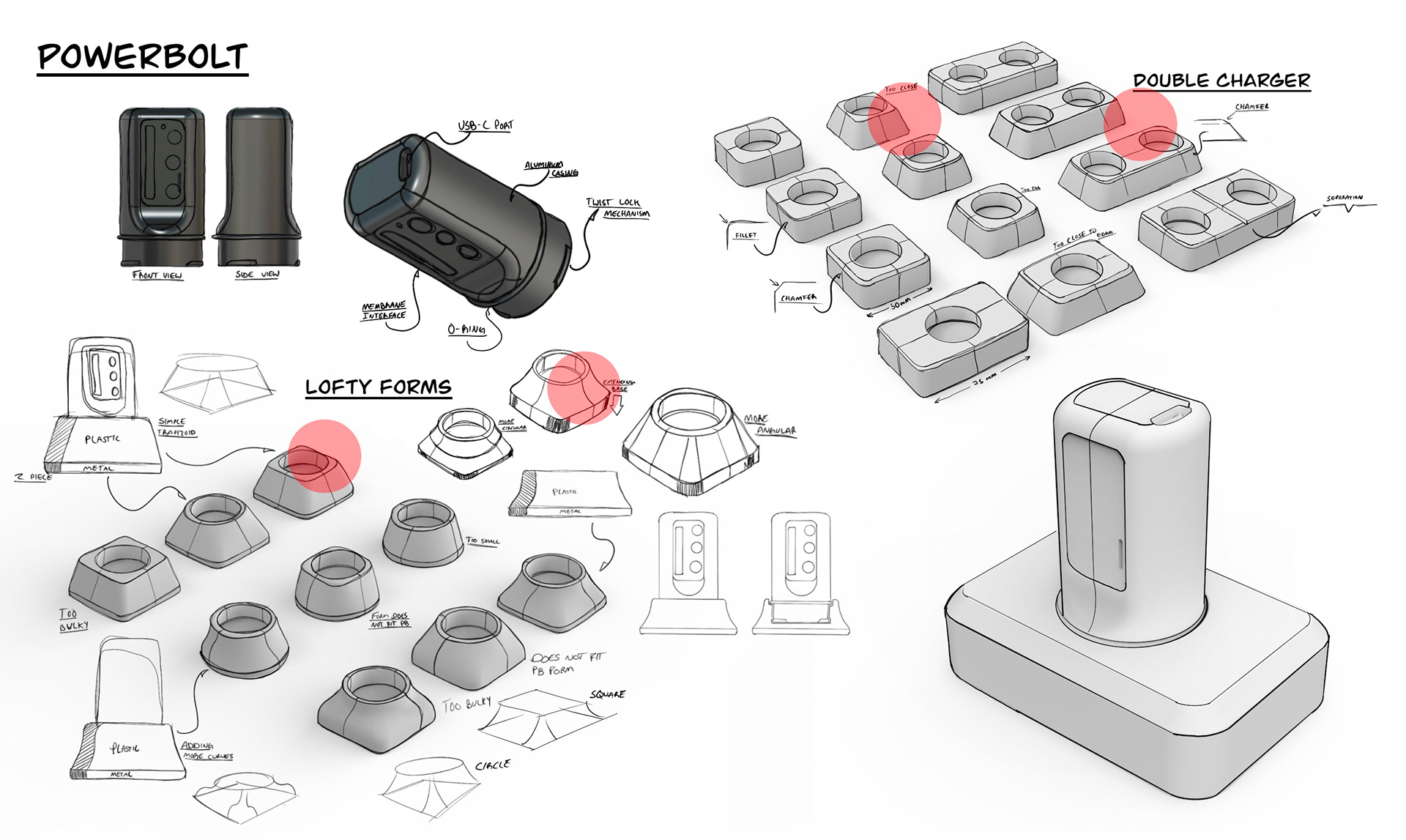
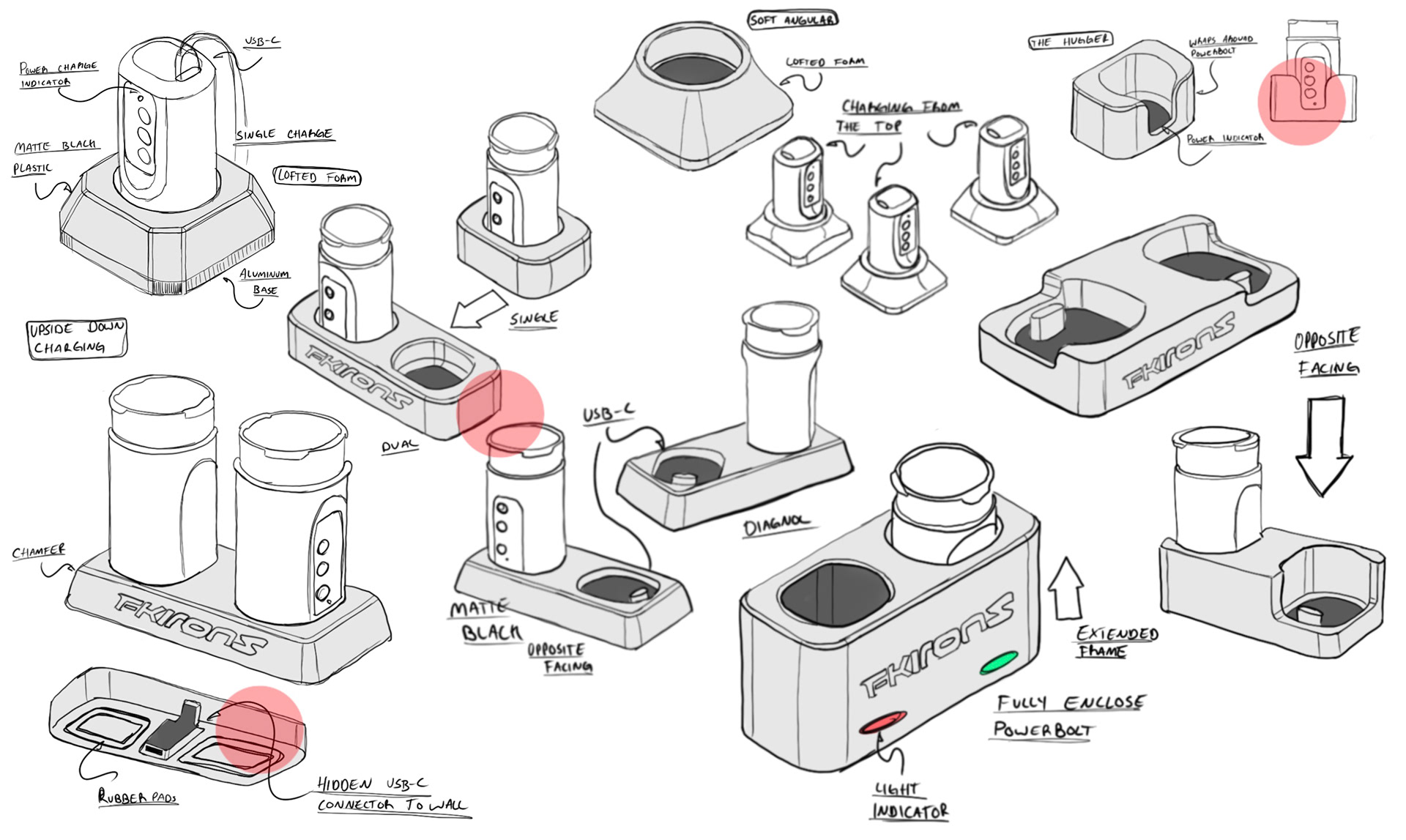
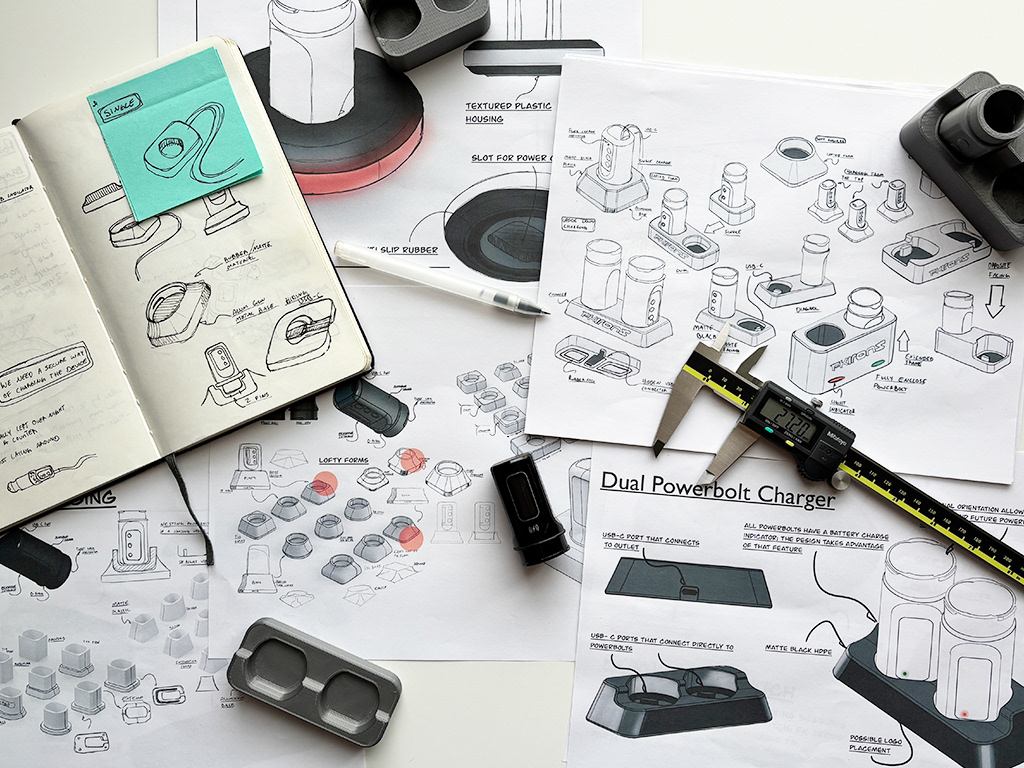
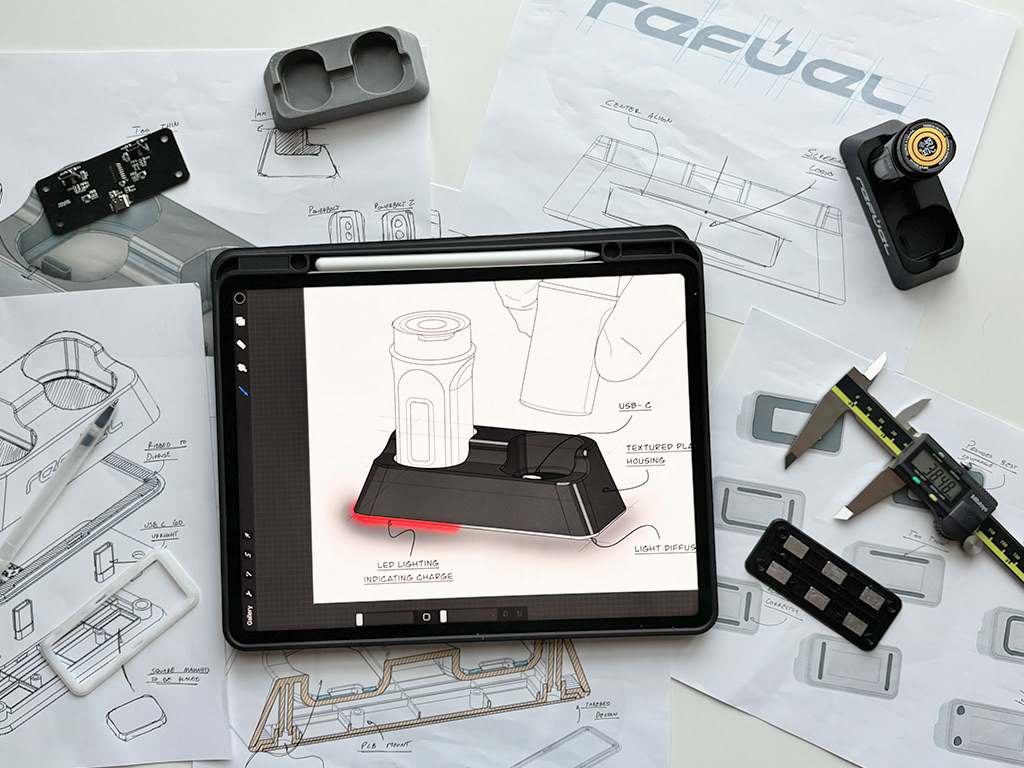
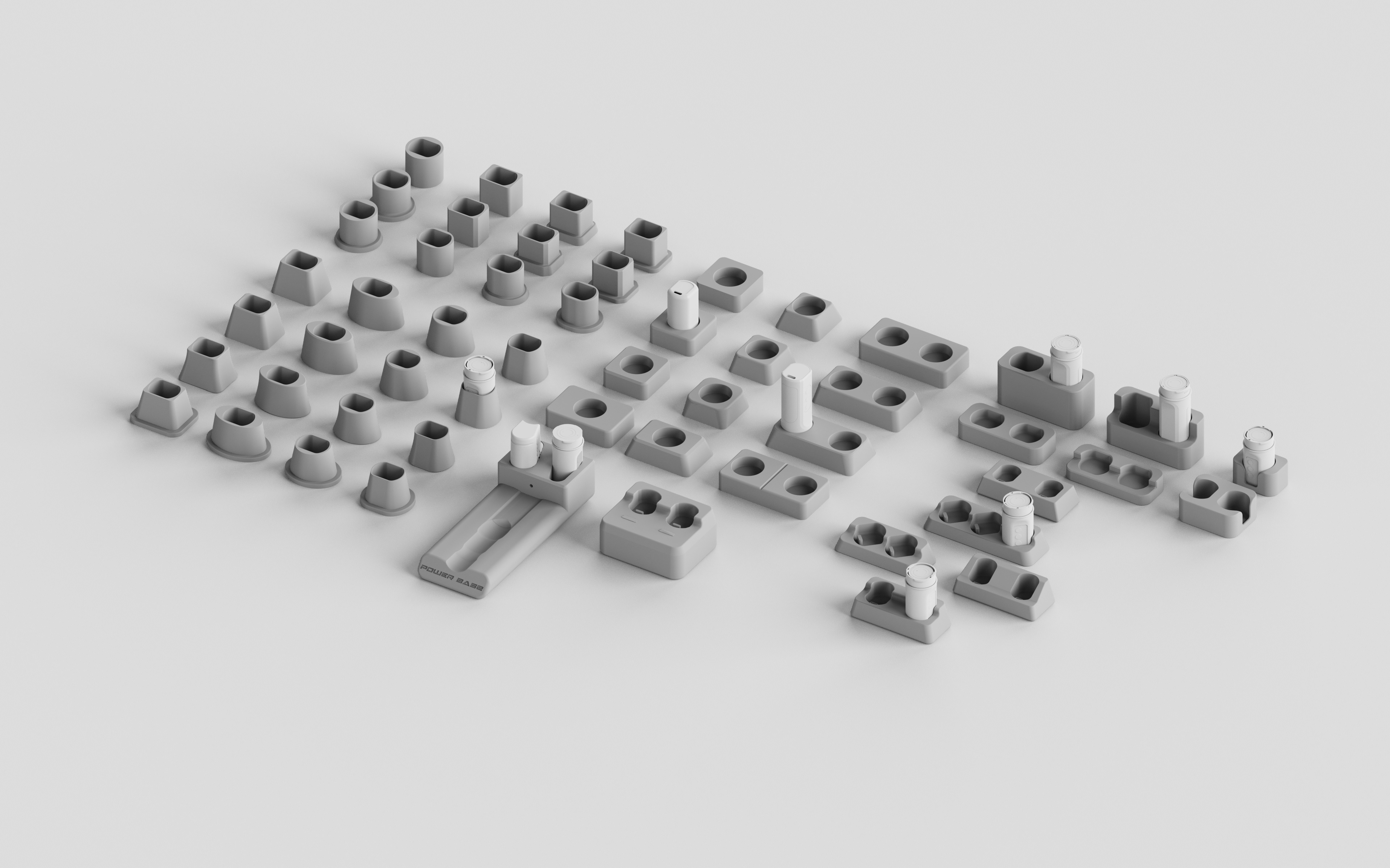
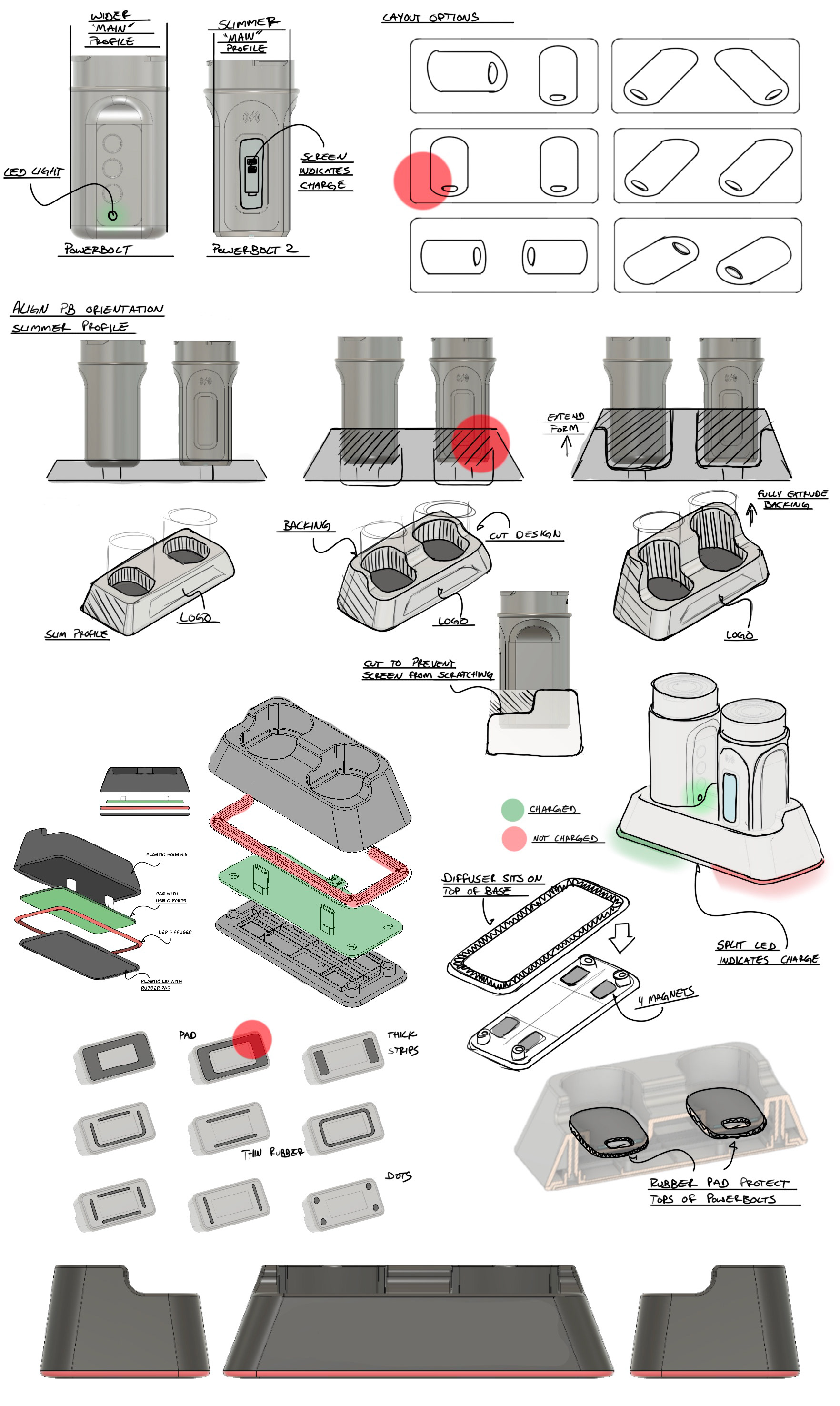
Early exploration focused on understanding how both batteries sat within the form and how to keep their interfaces fully visible during charging. This led to the defining move of the design: a cut across the front face that prevents contact with the Powerbolt II screen while also catching light and giving the profile a sense of direction.
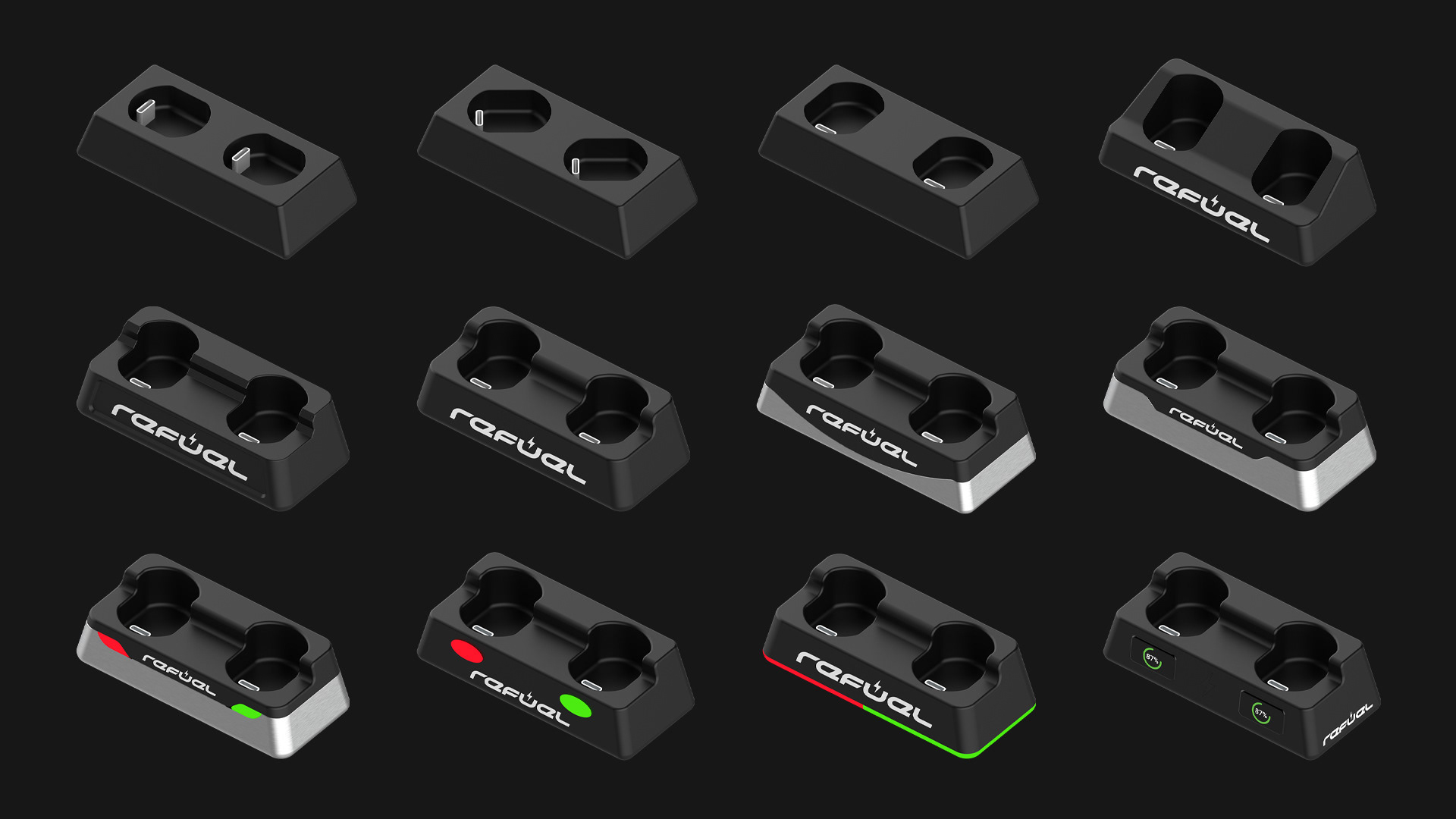
The charging dock was designed for compatibility with the entire Powerbolt series. This meant the interface needed to indicate the charging status regardless of which device was docked. I solved this by first exploring different interfaces that communicated 2 states: charging a drained battery, and when it was ready to use. This led to the "split light matrix" design that communicated the status of each device, regardless of which Powerbolt generation was being charged.
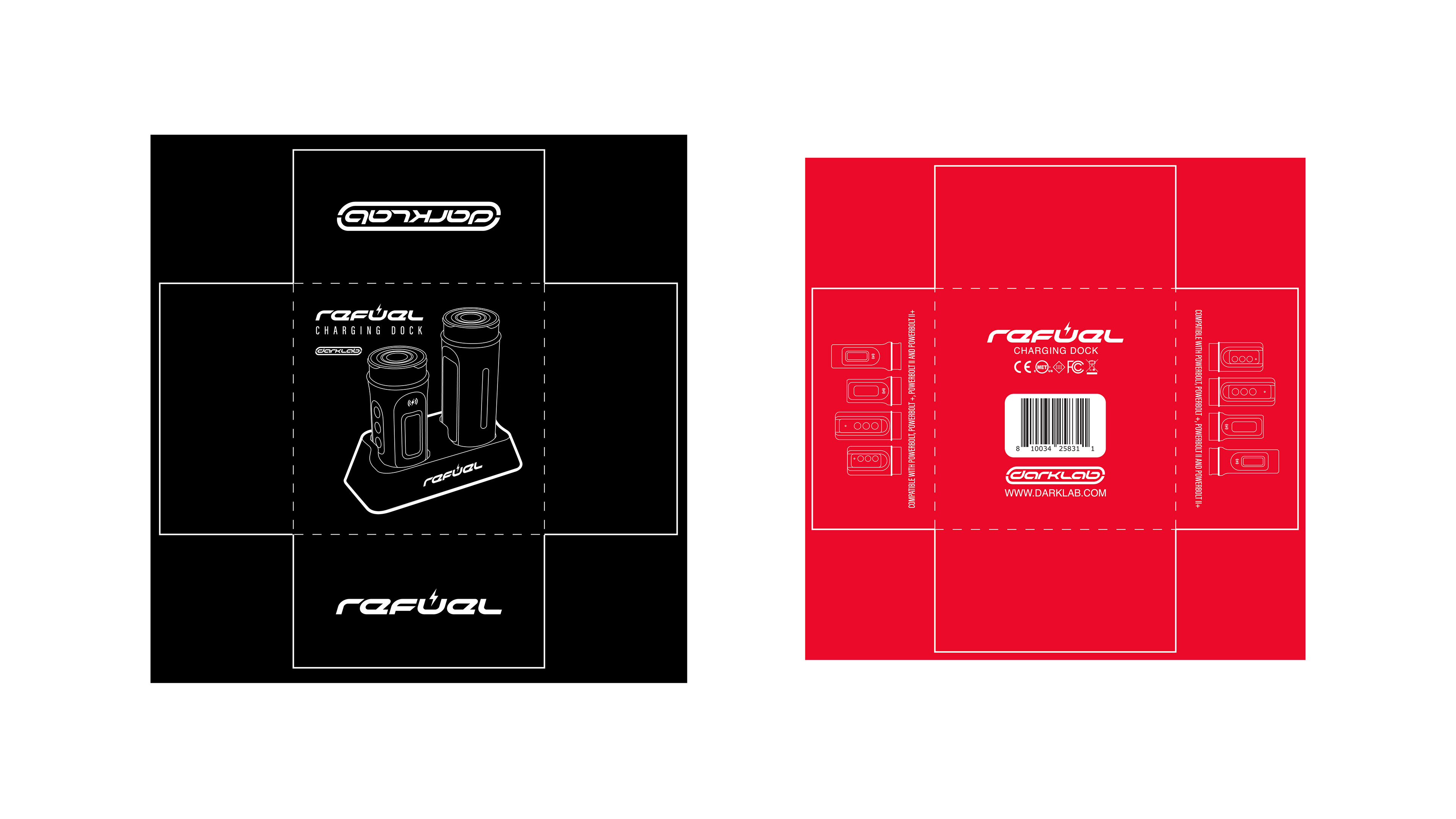
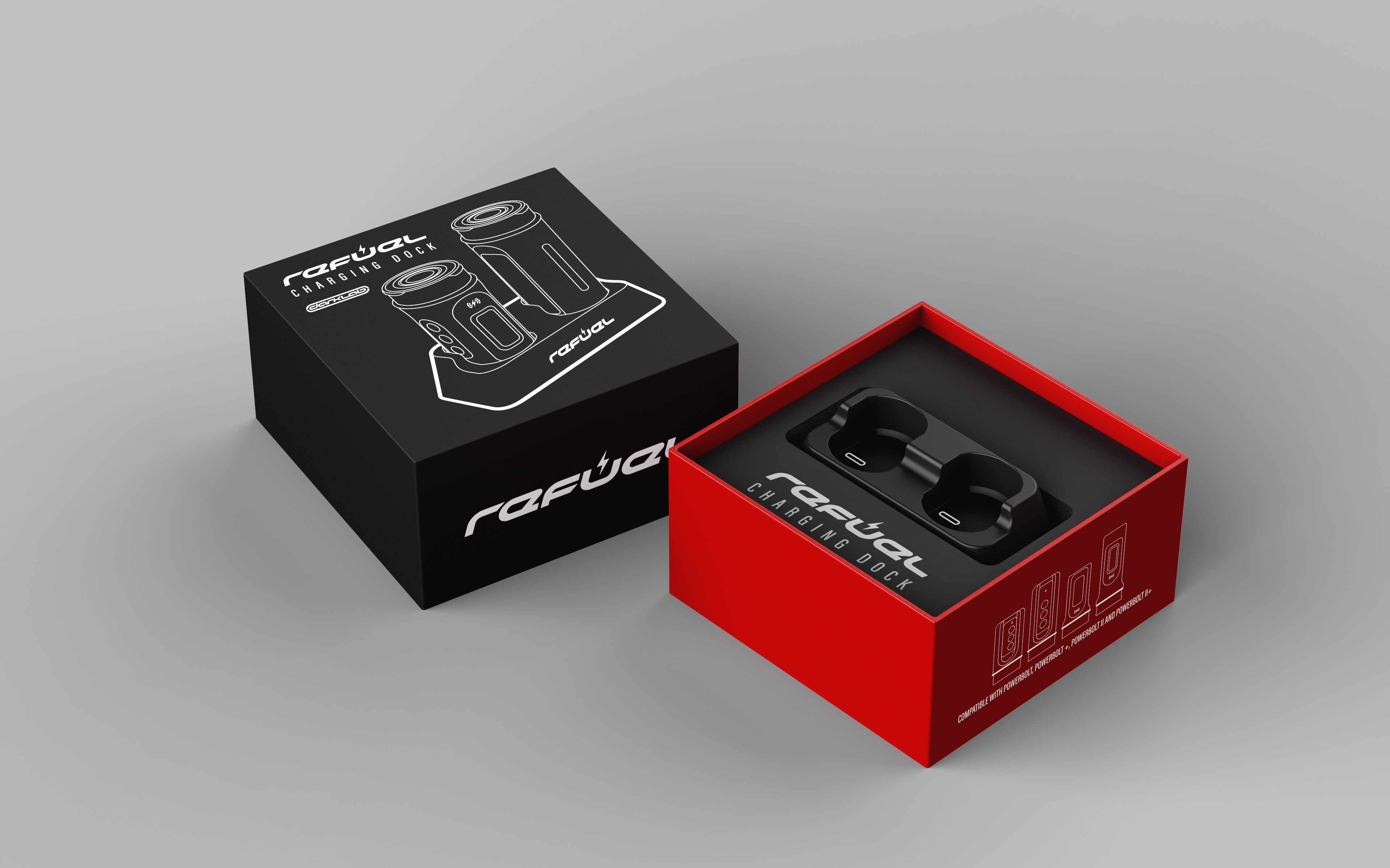
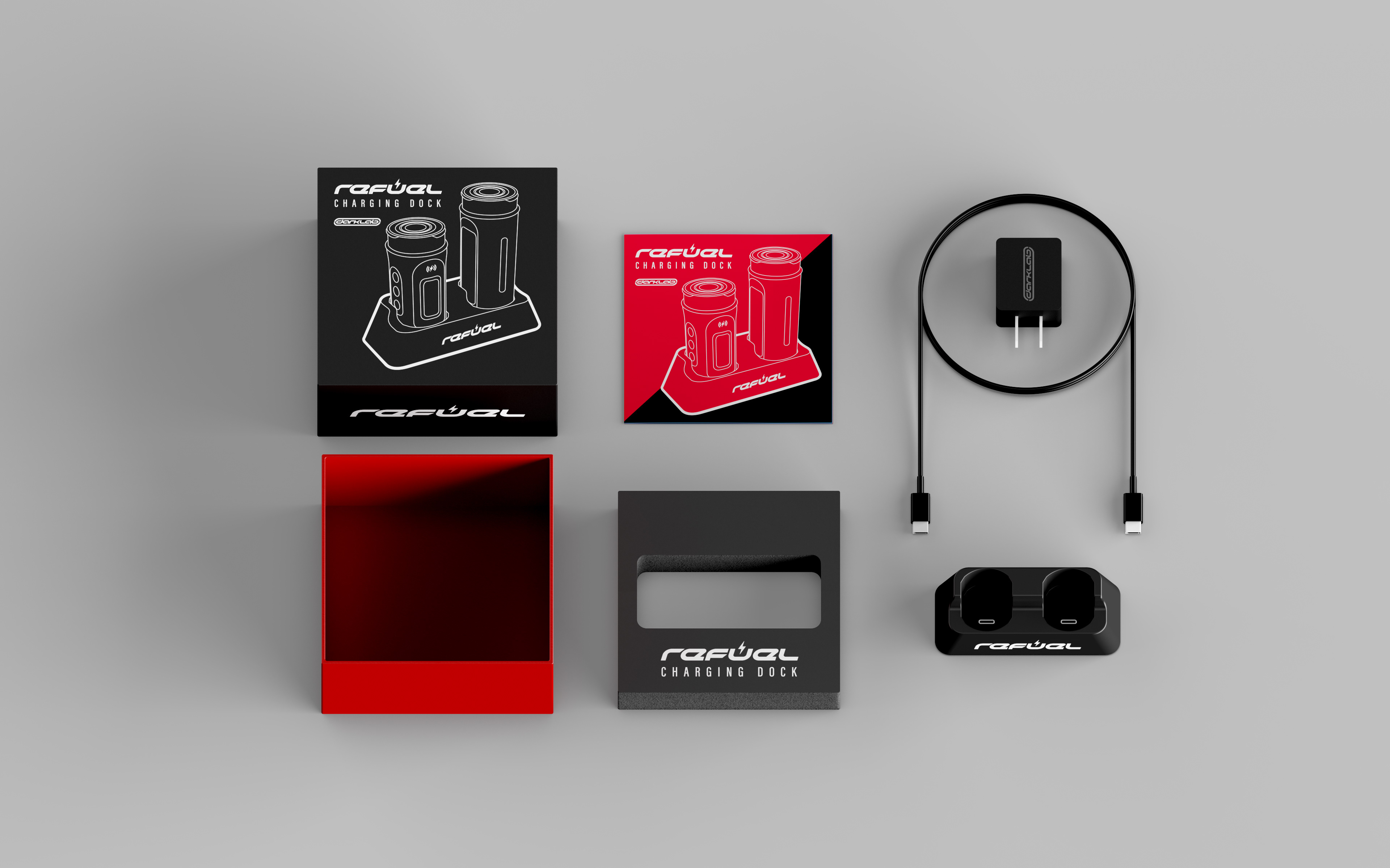
Packaging
The packaging used the same branding style and type of boxing experience as the machines. The packaging informs users the compatibility of the charging dock and safely houses the dock during transit.