ReviMo Niko
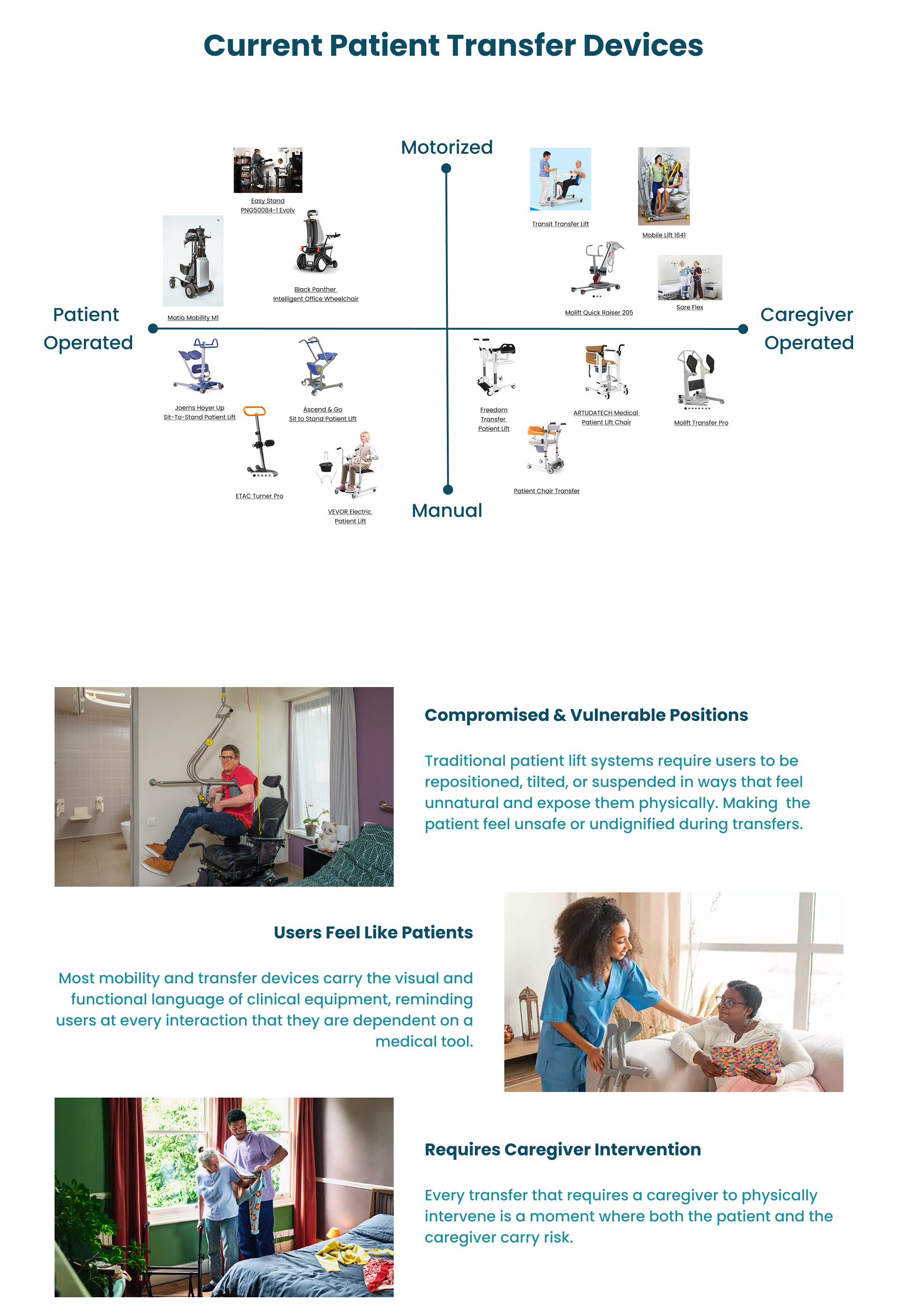
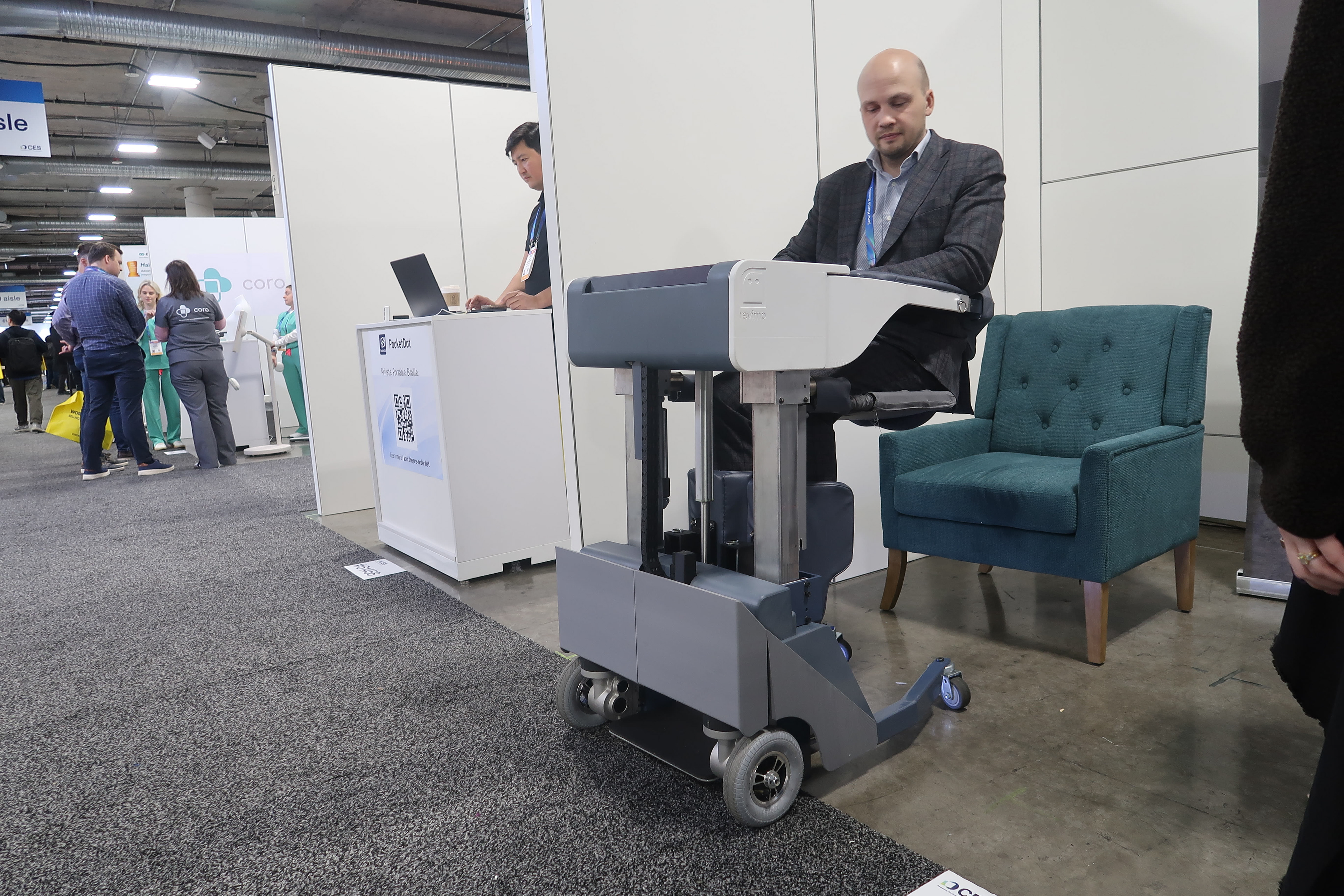
The ReviMo Niko is a patient transfer device designed to support caregivers and the elderly patients in their care. By blending the functionality of a patient lift with the freedom of a powered mobility system, the Niko helps caregivers assist with the most physically demanding moments of the day while giving patients a greater sense of control in their own space. ReviMo approached General Populace with the opportunity to transform an industry that had long prioritized clinical function over human experience, and to design a solution that could feel at home in the places people actually live. My role spanned the full design process: researching the market and existing patient transfer systems, breaking down the original prototype to identify opportunities for improvement, and contributing to brainstorming and ideation sessions that shaped the design direction.
Press: Wall Street Journal - New Accelerator Seeks to Boost Neurotech Startups
Role:
Ergonomic & Market Research
Industrial Design
Design Strategy
Design for Manufacturing
Product Visualization
Branding
Industrial Design Lead: Germán Monetti
Design Manager: Sebastian Gomez- Puerto
Junior Industrial Designer: Aref Zebian
The Opportunity:
ReviMo approached General Populace to rethink a category that had long prioritized clinical function over human experience: patient transfer devices for elderly adults aging in place. The tools available were built for hospitals, and they carried that institutional feeling into people's homes. This undermined the sense of identity and independence that came from staying in a familiar space. Working from an existing engineering prototype that already solved the core lifting mechanism, the challenge was translating a proven but clinical platform into something that could restore dignity during transfers, support intuitive independent operation, and soften its presence enough to belong in a bedroom or bathroom rather than a care facility.
The Outcome:
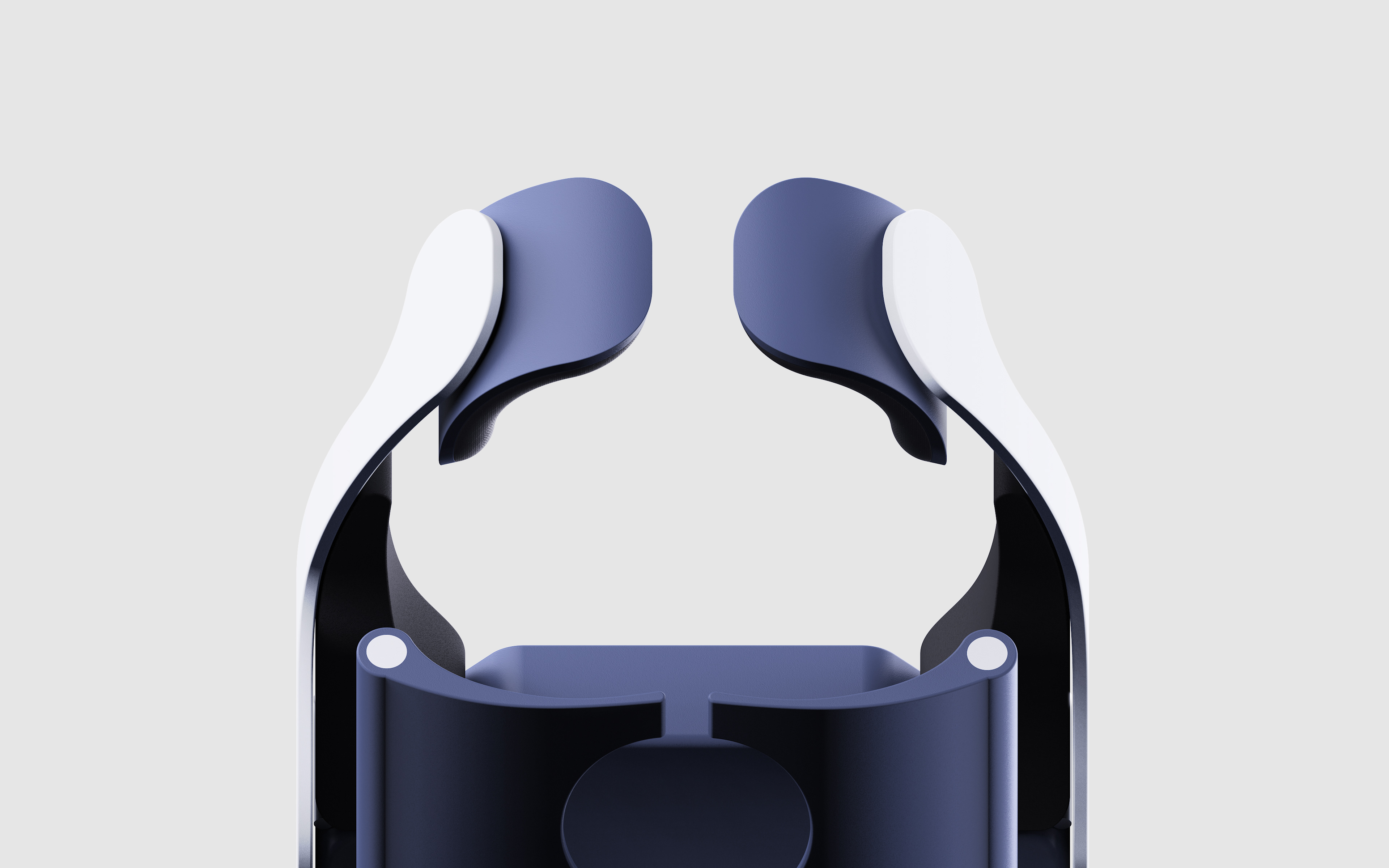
We broke down the prototype to isolate where industrial design could add the most value around the console interface, arm structure, enclosure, material strategy. Every decision was grounded in accessible design's four pillars: perceivable, operable, understandable, robust. Small moves carried outsized weight: recessing the grab handle so it read as integrated rather than bolted-on, angling the rear arms to wrap around the user so the support felt natural instead of mechanical, and pairing an off-white medical palette with warmer secondary tones to keep the credibility of a clinical device without the coldness of one. That same thinking extended into the brand itself, built alongside ReviMo to feel compassionate and empowering rather than institutional.
Aging In Place
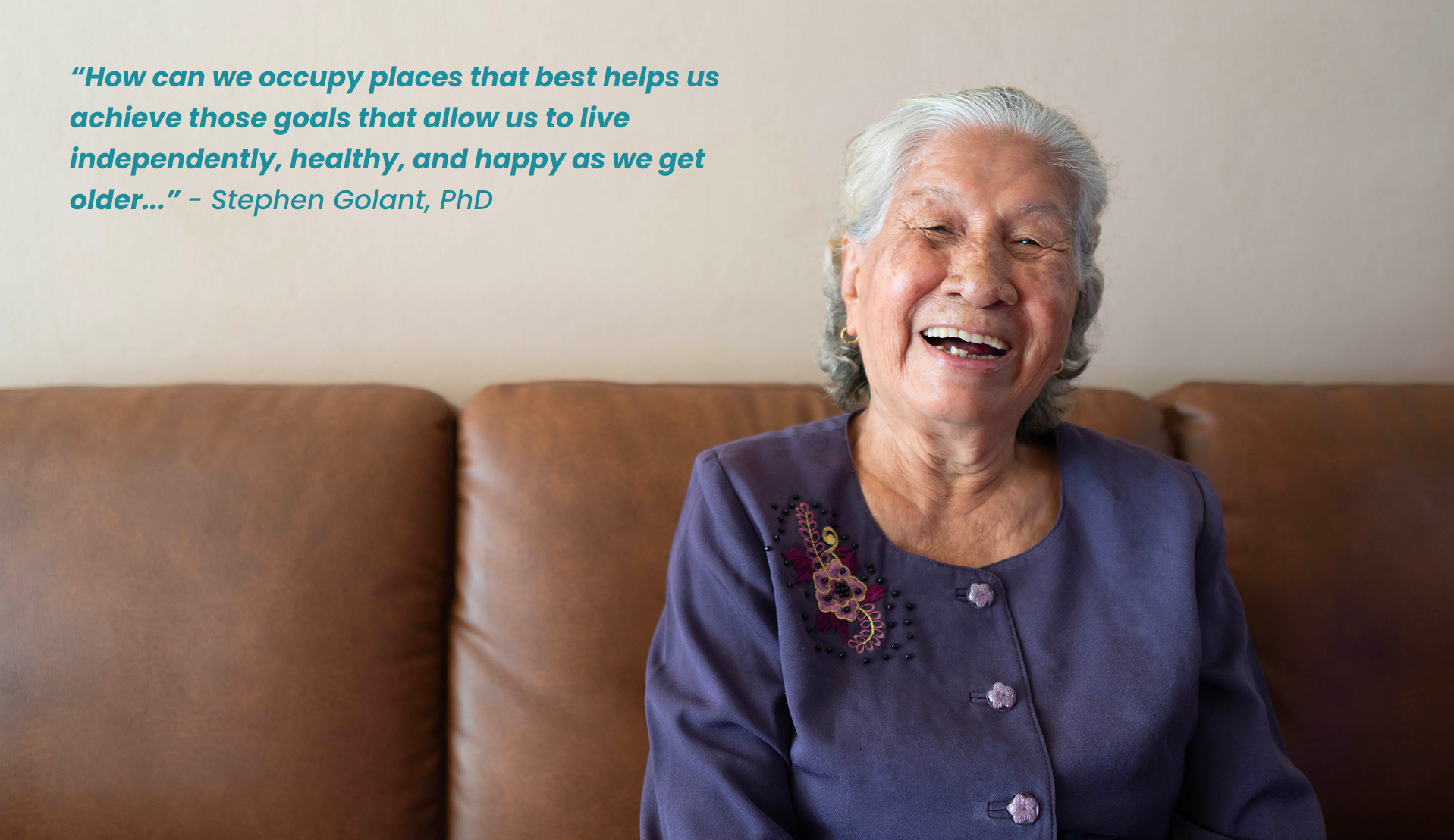
People feel safer when they have an emotional attachment to the spaces they built their lives in. A familiar environment can contribute to an older adult's sense of identity, help them remain socially connected, and support a life lived on their own terms. For individuals with limited mobility, maintaining that life often depends on the support of a caregiver or nurse who assists with the most physically demanding moments of the day. Those who care for elderly adults with limited mobility face daily challenges that strain both the caregiver and the person in their care, often in the most private and personal spaces of the home. The tools available to help are largely designed for clinical settings, and they bring that clinical feeling with them. Designing a solution that supports caregivers, restores a sense of independence to the patient, and belongs in a home or care environment without feeling institutional was the problem we set out to solve.
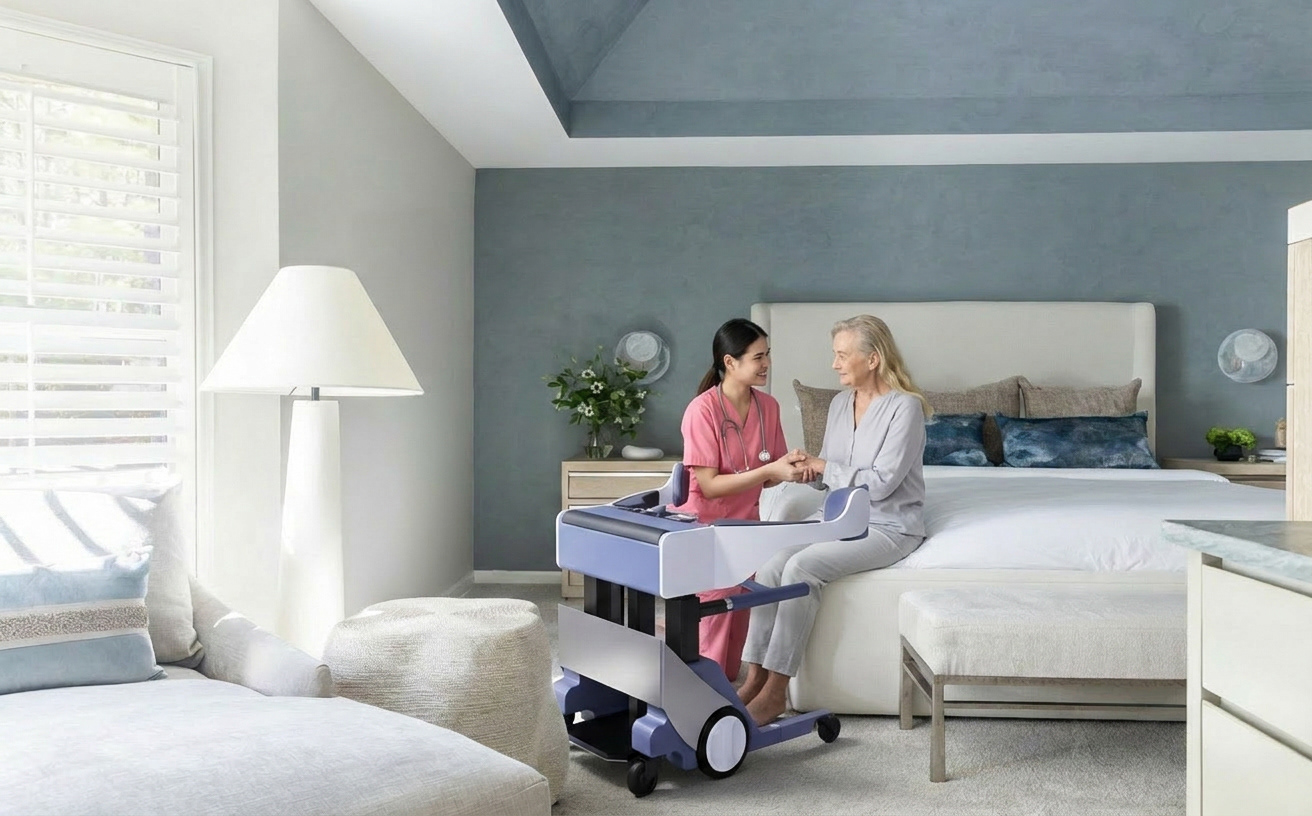
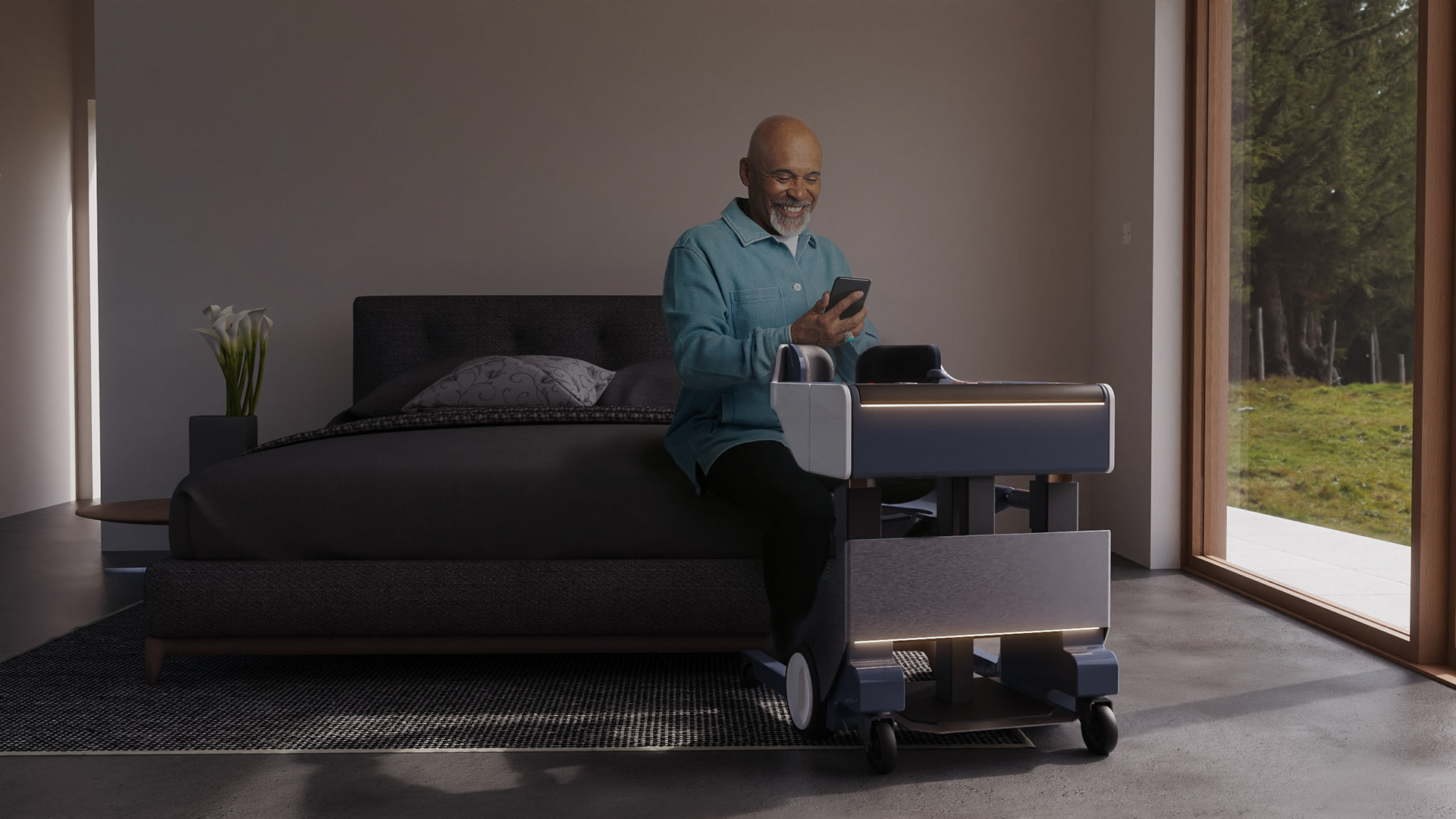
The ReviMo Niko is designed to support daily activities alongside the caregiver, not replace them. By providing a stable assisted transfer system that moves with the patient through the spaces they use most, the device gives caregivers the mechanical support they need while allowing the person in their care to move through their own space on their own terms.
Breakdown of the Niko Prototype
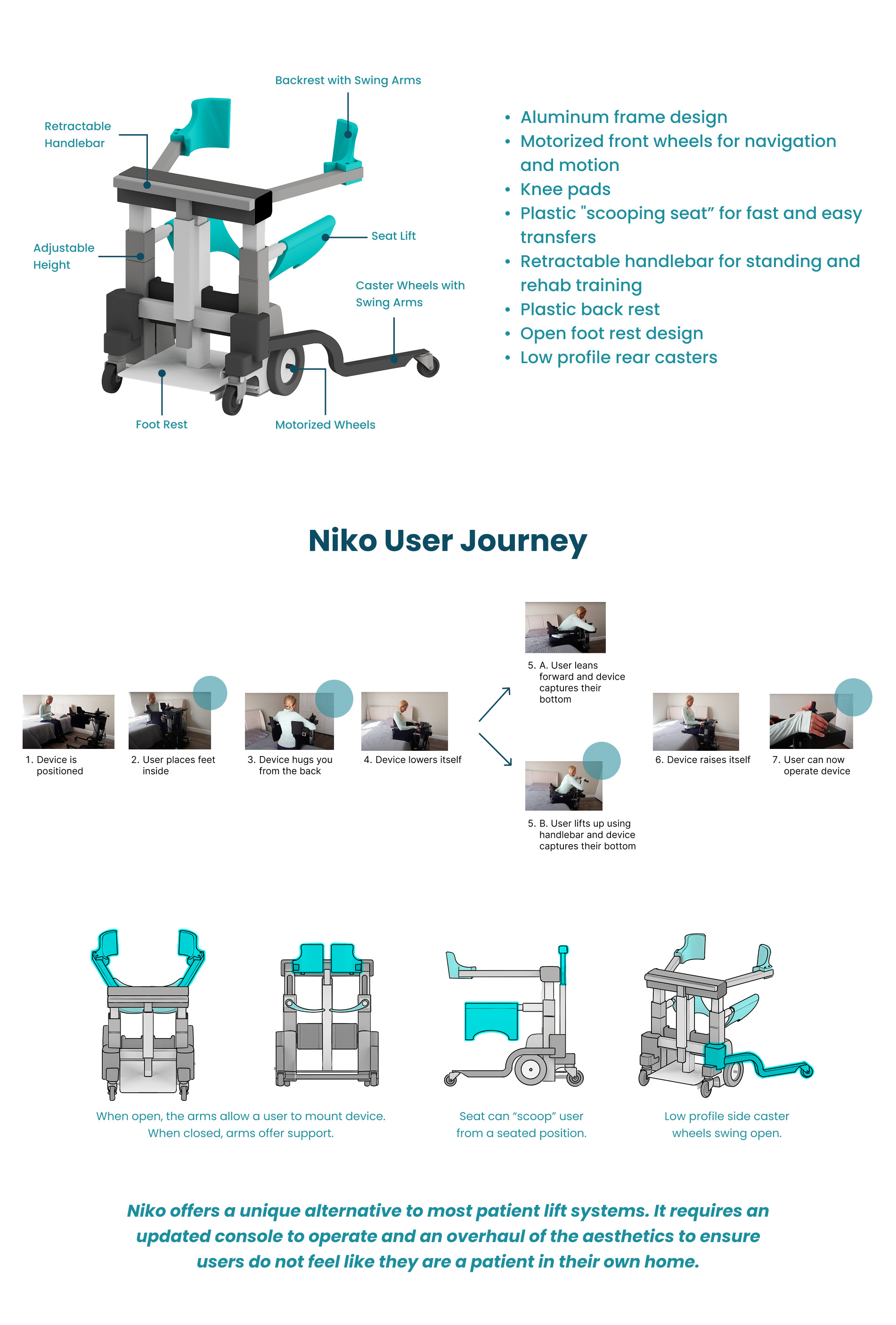
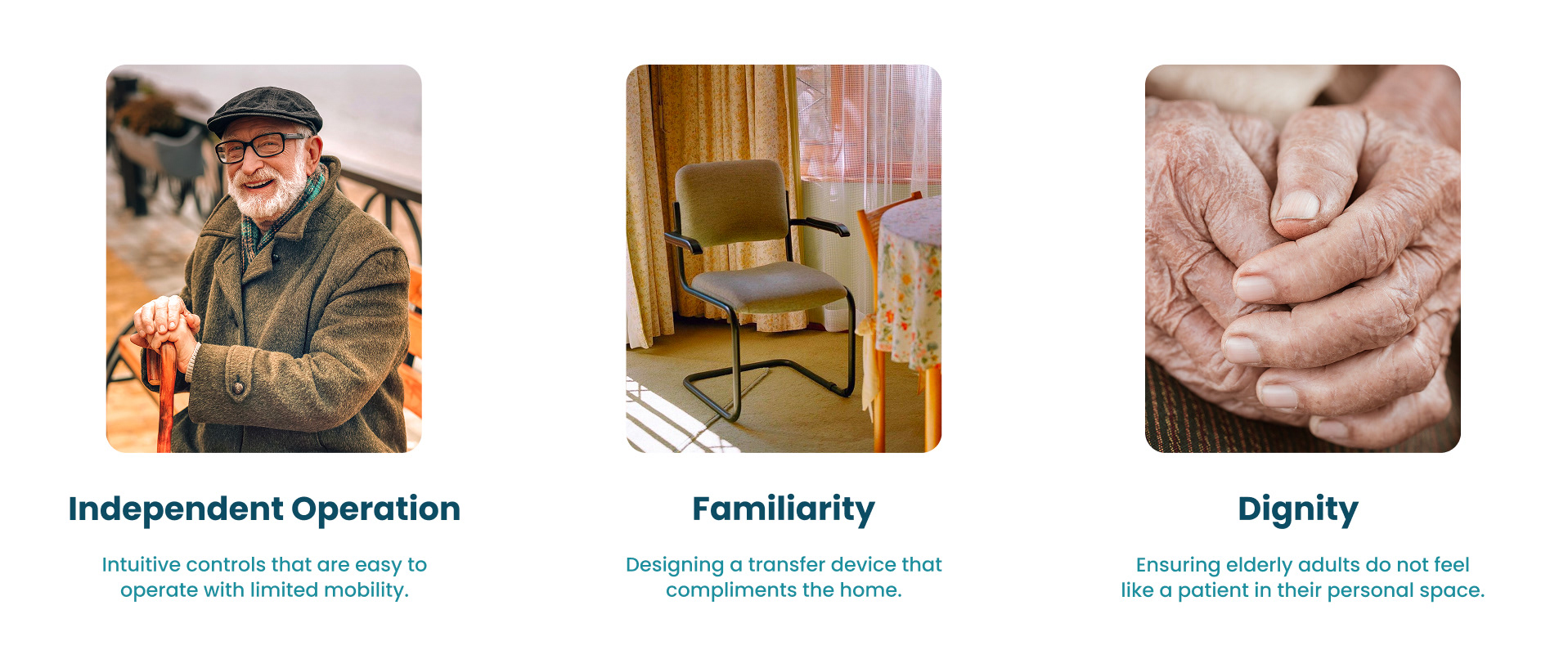
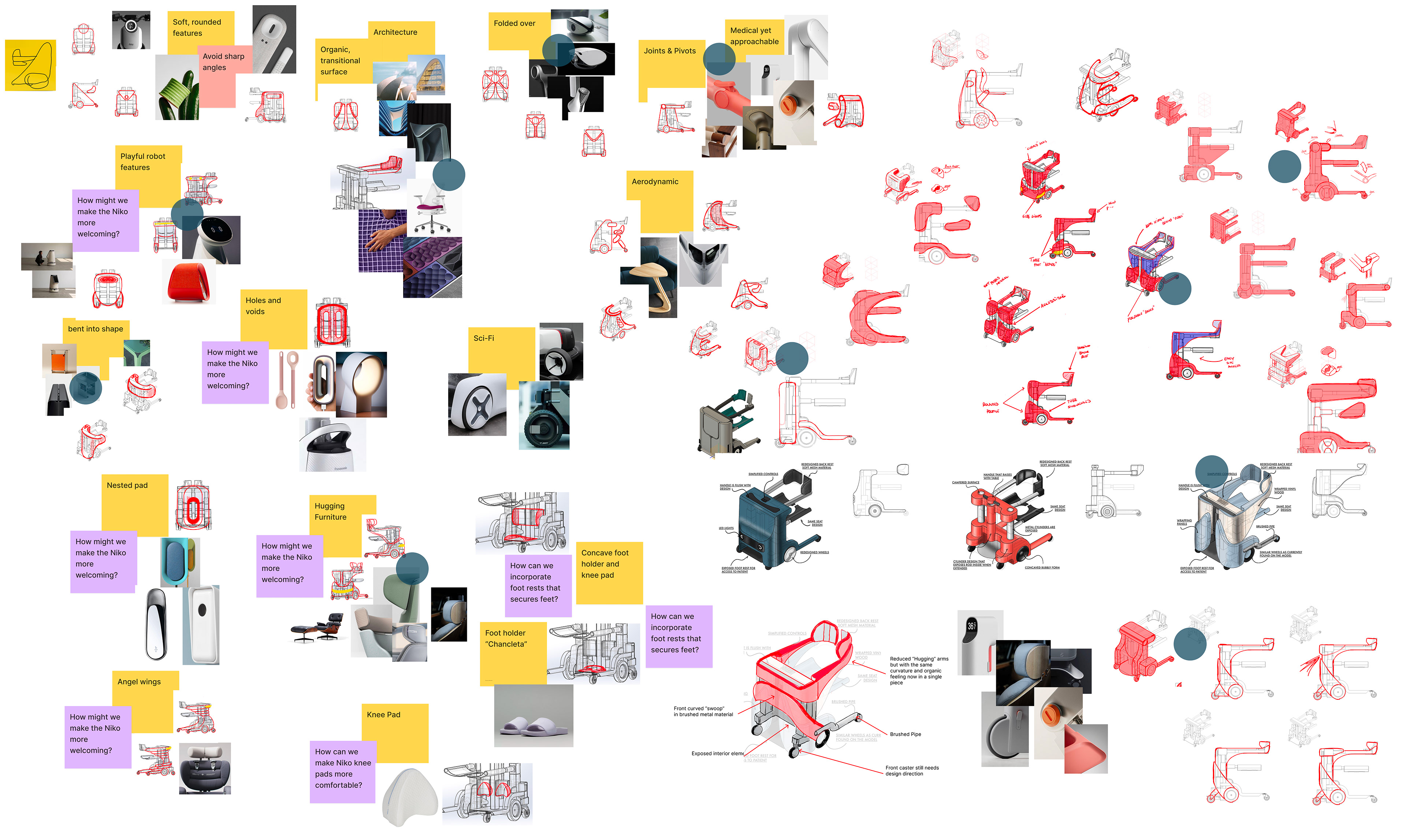
The project began with an existing engineering prototype that established the core lifting mechanism and structural architecture. Rather than redesigning the system from scratch, the design effort focused on understanding the platform’s constraints and identifying opportunities to improve usability, approachability, and overall user experience. Through a breakdown of the prototype and analysis of the transfer workflow, we mapped the key components of the system and highlighted areas where industrial design could add the most value. This included the console interface, arm structure, enclosure, and material strategy. From this analysis, a set of design principles was established to guide the concept development: restore dignity during transfers, enable independent operation through intuitive controls, and soften the product’s presence so it could integrate more naturally into home environments.
Designed to be Accessible and Approachable
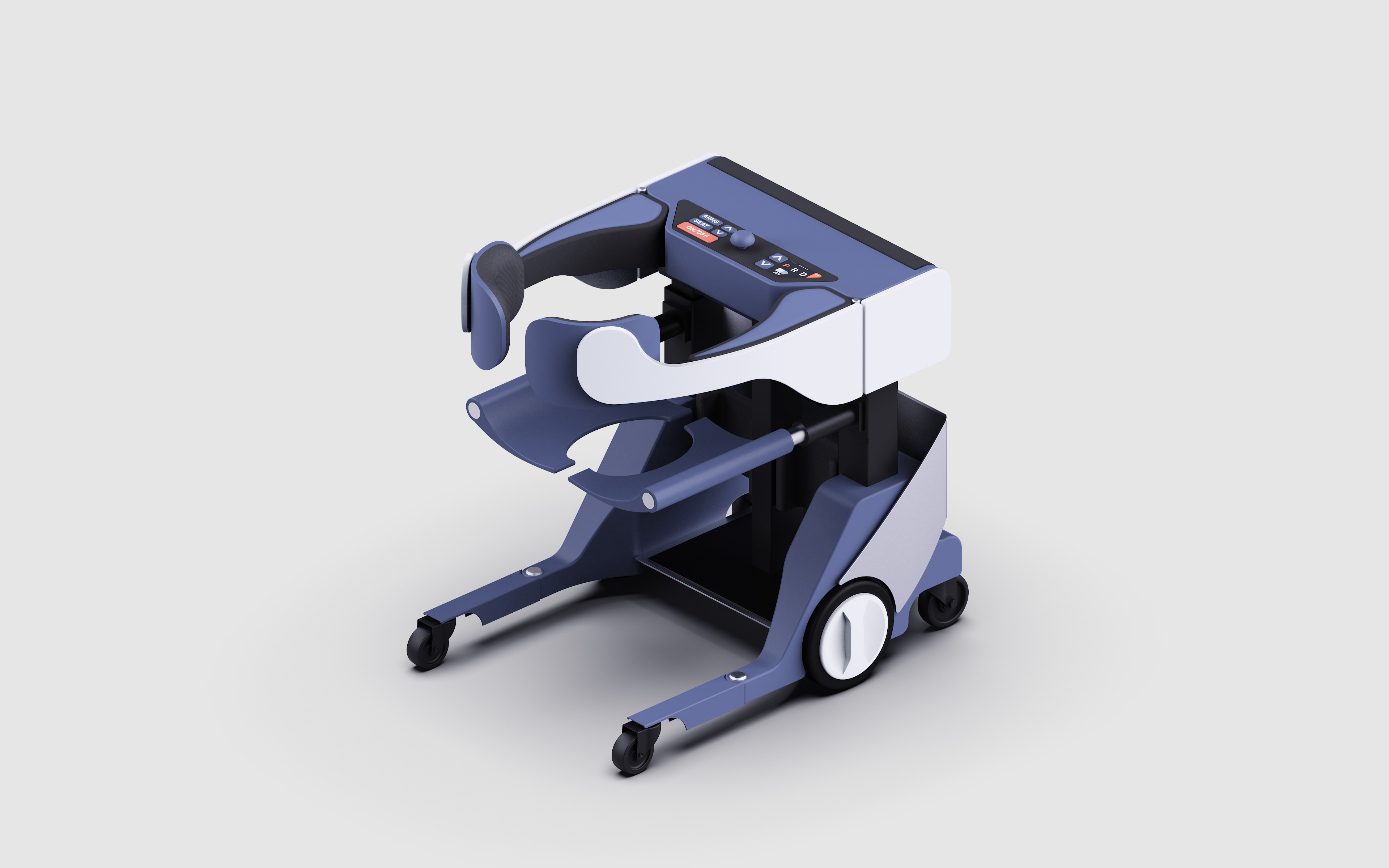
With the core system architecture defined, the design effort focused on refining the primary user interaction points that included the console interface and upper arm structure. Exploration centered on how users would approach, understand, and control the device during the transfer process. Multiple console placement and interface concepts were developed to ensure the controls were easily reachable from a seated position and intuitive for users with varying levels of dexterity. In parallel, the arm structure was refined to visually communicate support and stability while integrating with the fixed mechanical platform. Every decision was grounded in the four principles of accessible design: the form needed to be perceivable, operable, understandable, and robust, communicating its purpose and safety before anyone touched it, and performing reliably across every environment it would enter. These principles guided the evolution from early sketches to refined CAD, ensuring the interaction, structure, and visual language worked together to create a device that felt both dependable and approachable.
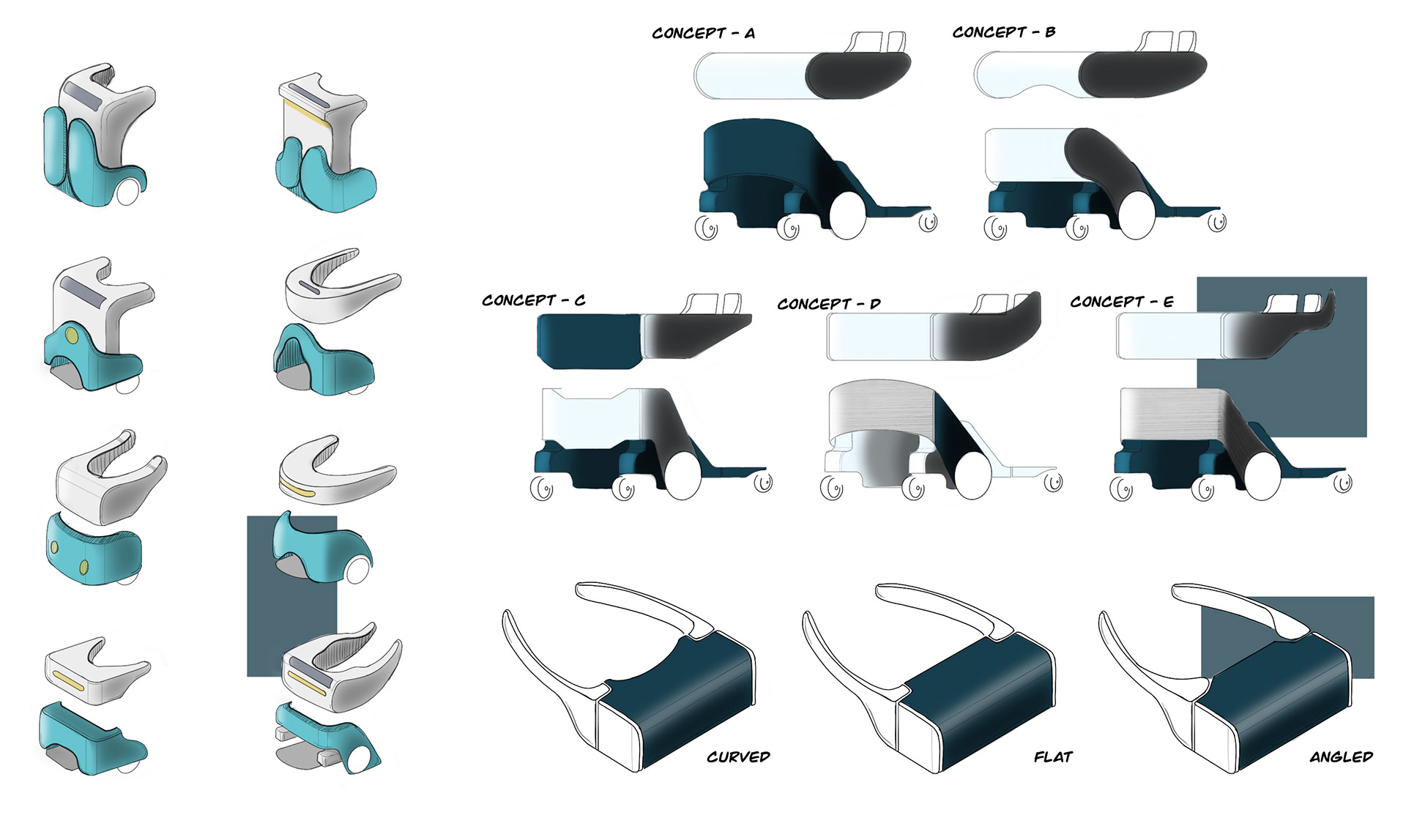
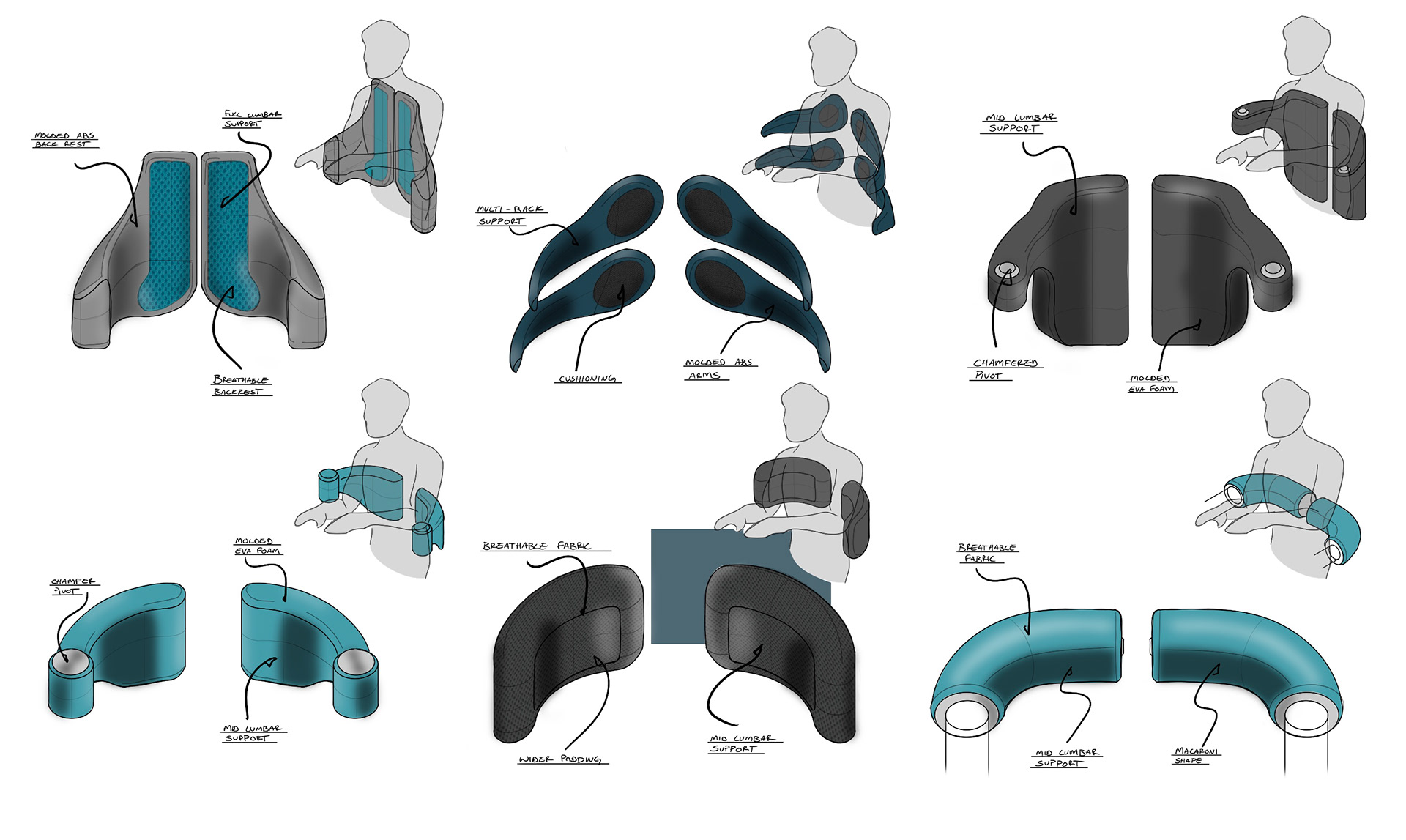
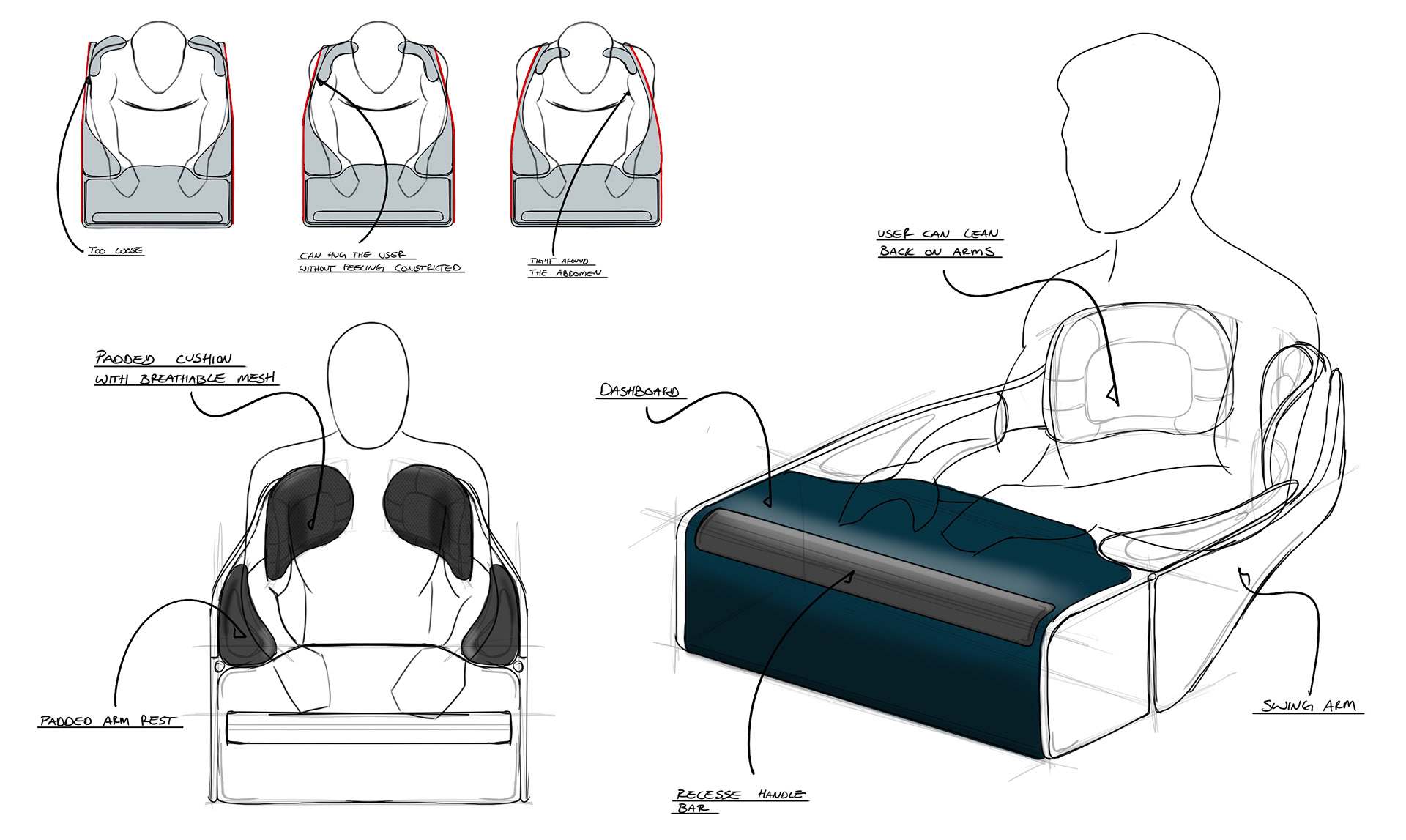
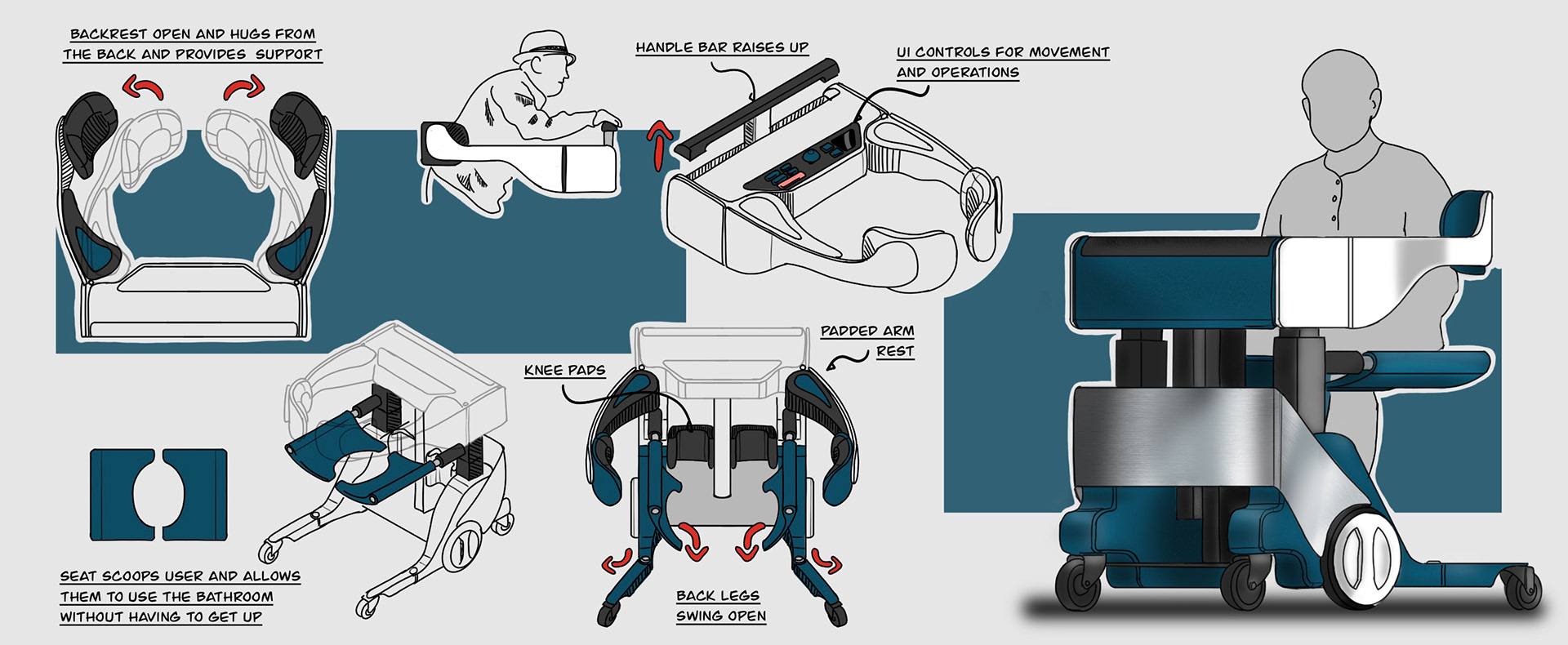
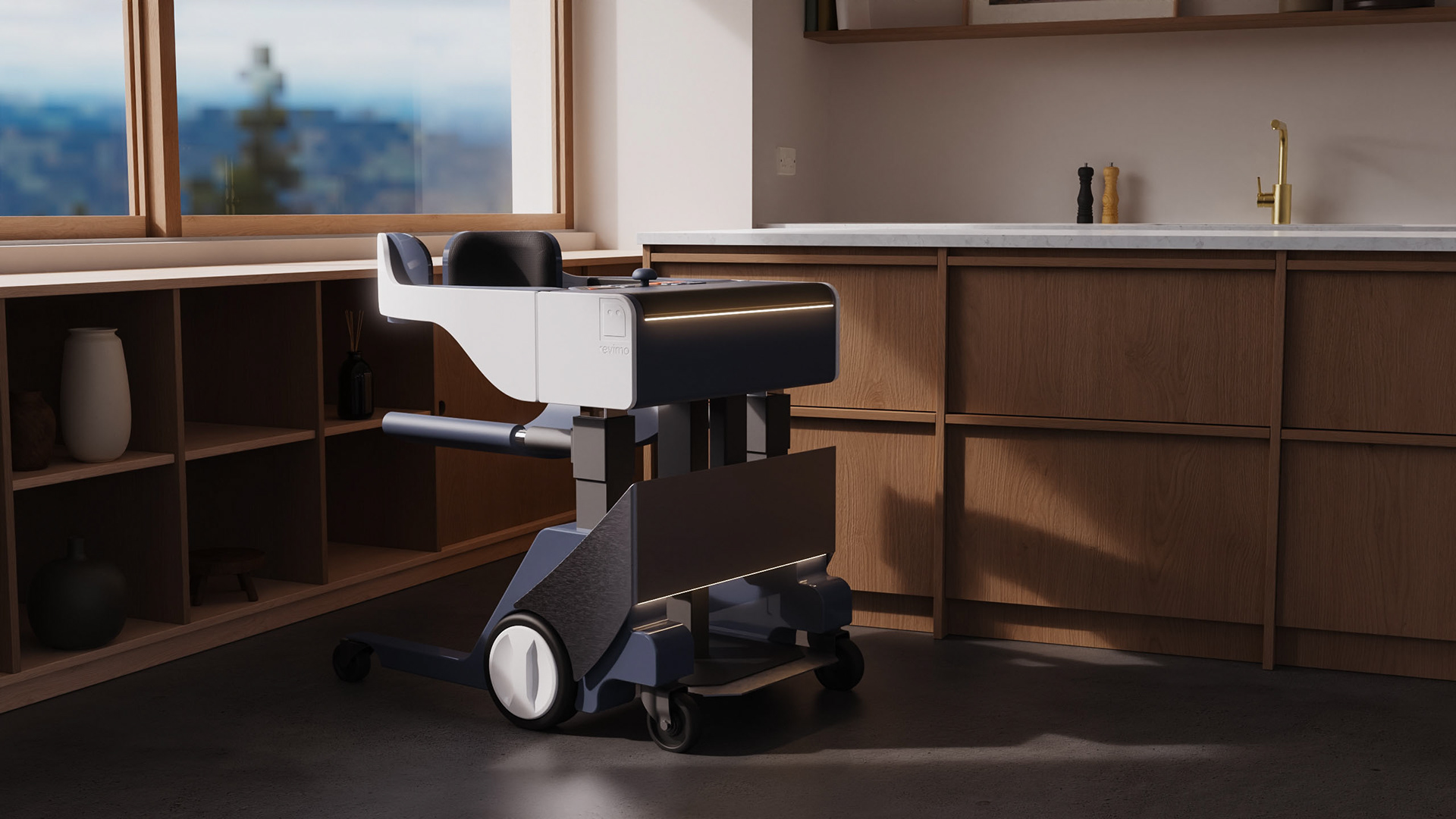
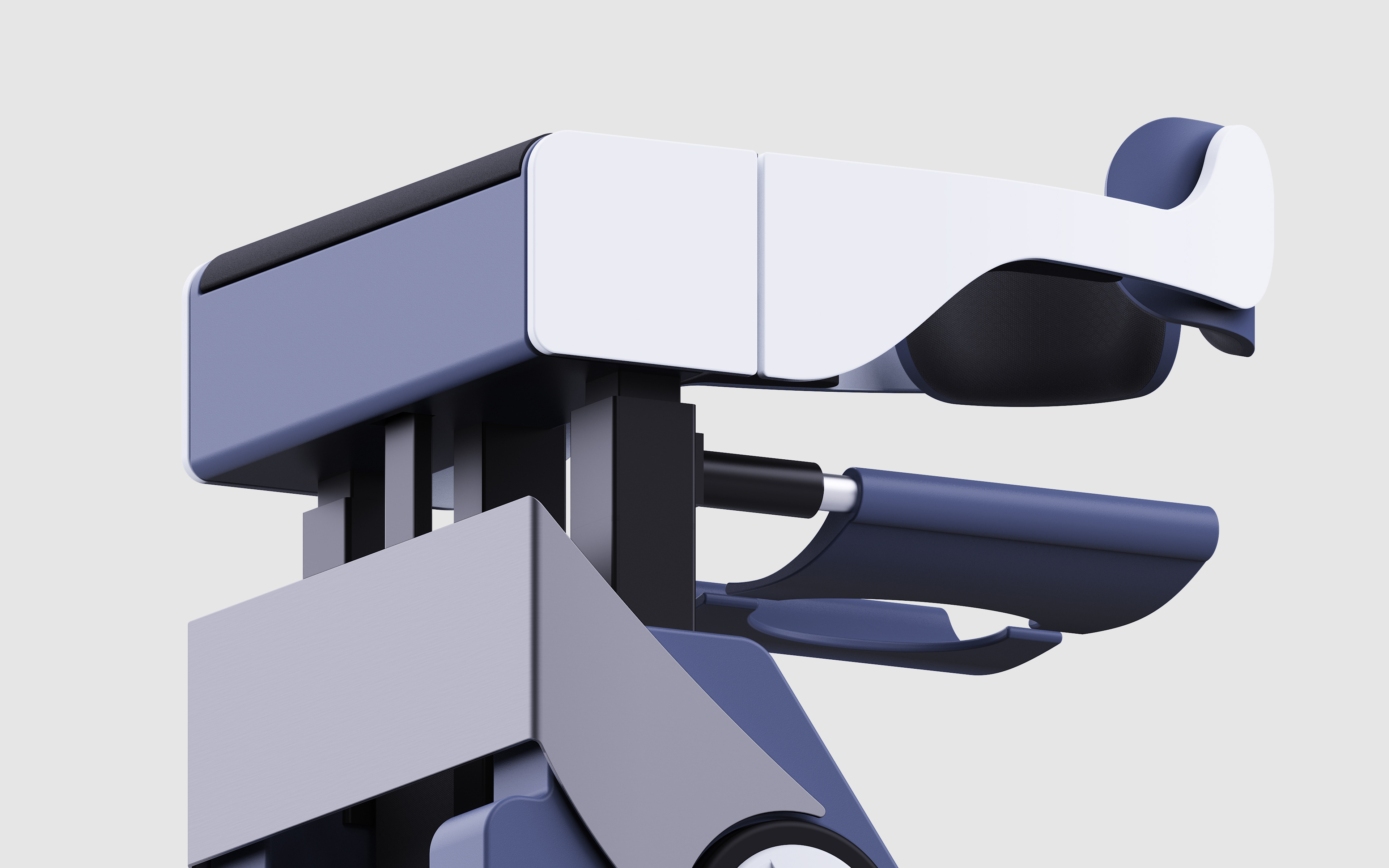
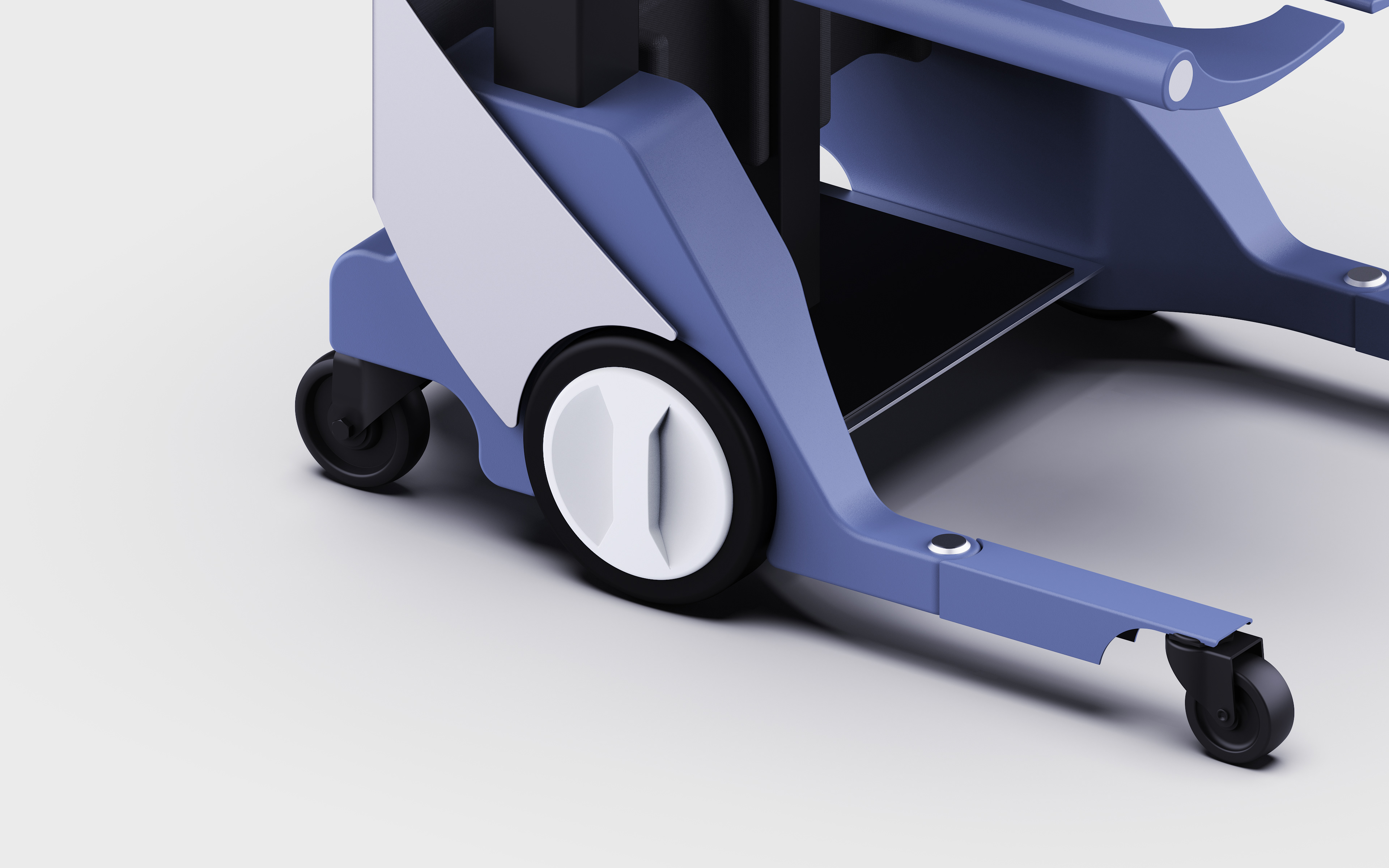
The grab handle was recessed into the frame so it sat flush and readable within the overall form rather than reading as a clinical add-on. The rear swinging arms were angled to wrap around the user, providing back support while making the act of being held feel natural rather than mechanical. Panels were selectively thickened to communicate solidity and security without adding visual weight, and a bent metal accent was introduced to break up the form while concealing the motor housing behind a detail that felt intentional.
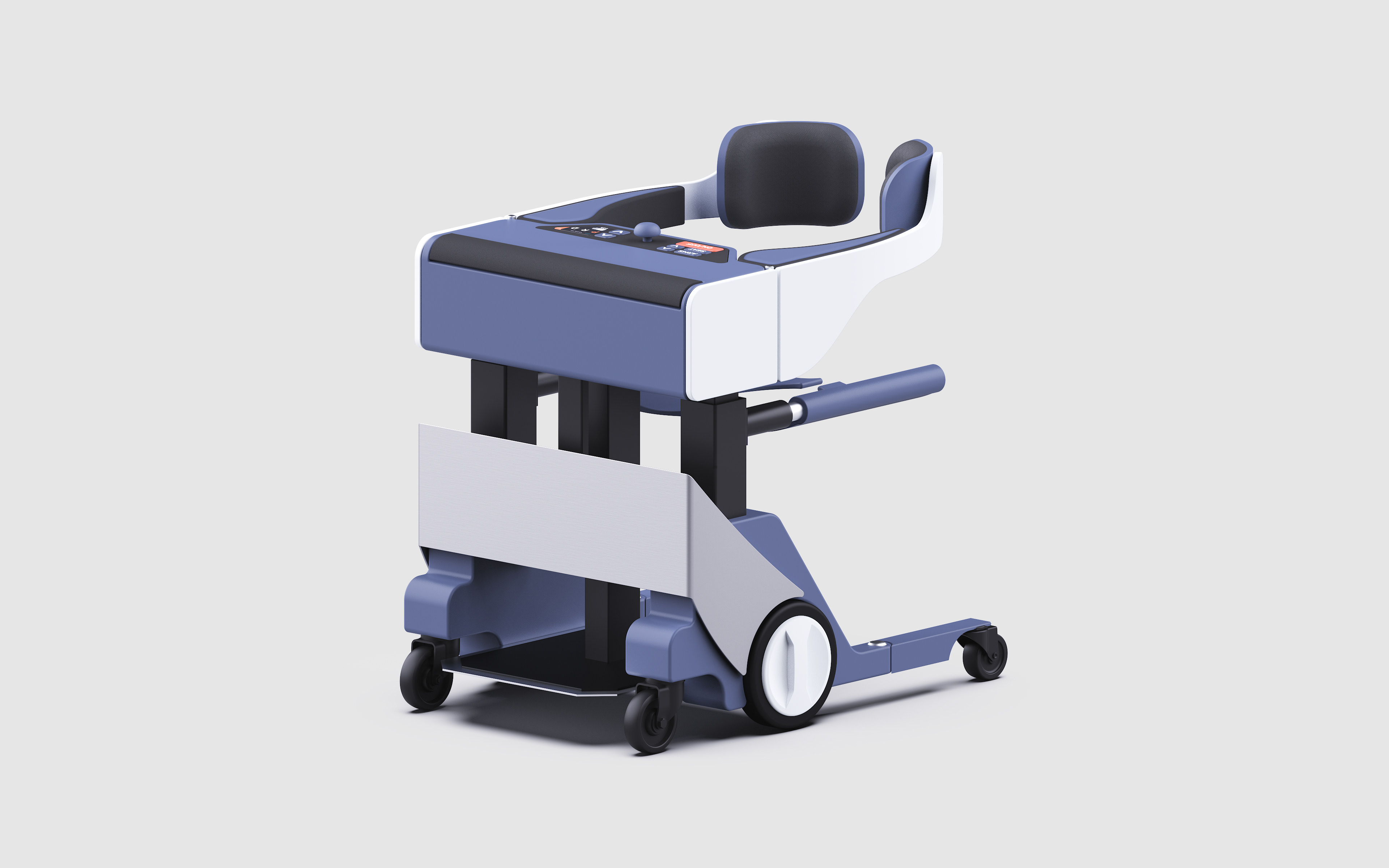
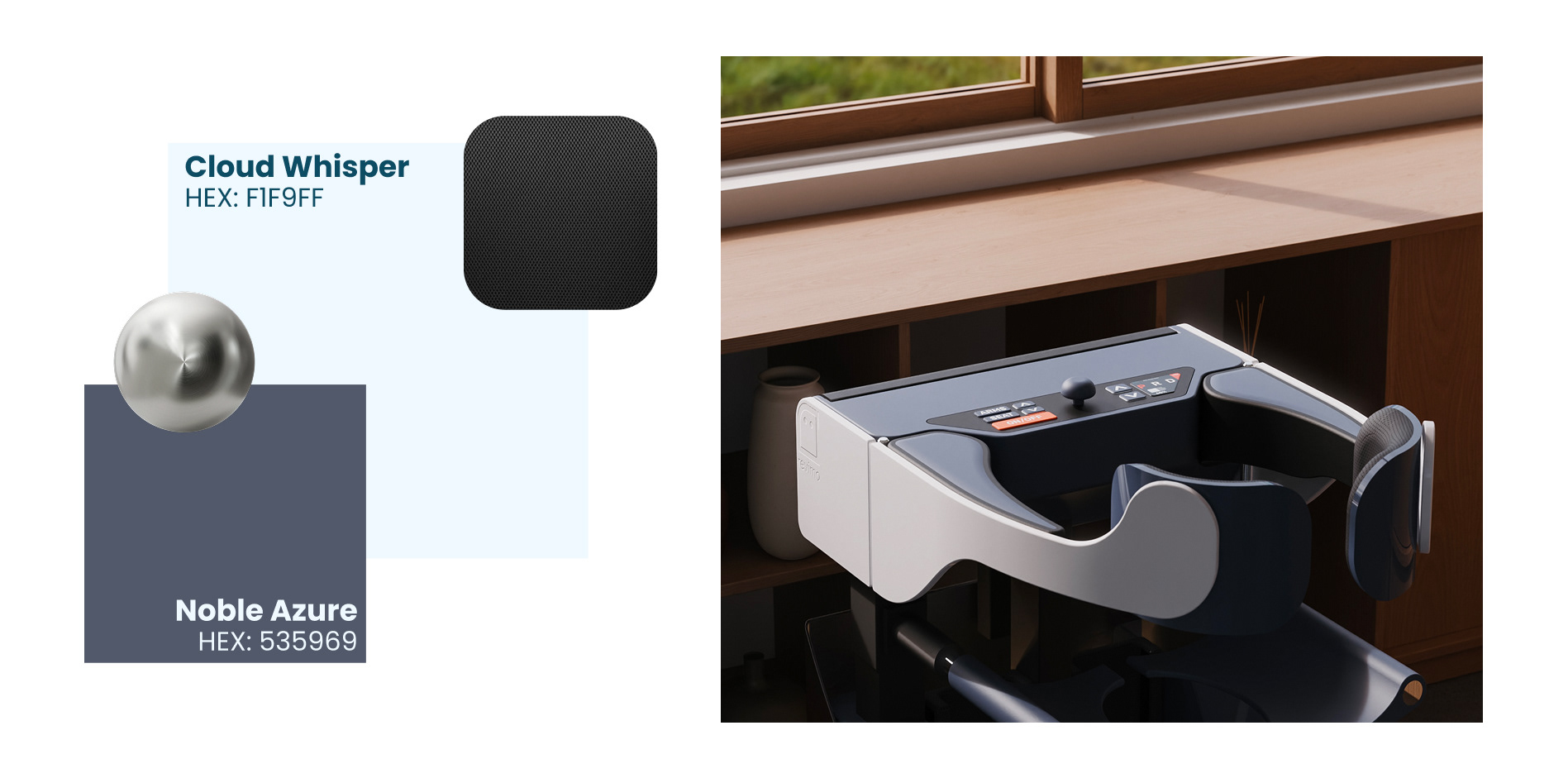
CMF decisions carried the same logic: an off-white was chosen to retain the credibility and cleanliness associated with medical devices, paired with secondary tones to bring approachability into the palette. Plastic and metal were selected for their durability and are materials that reinforce the sense of quality and longevity the device needs to project in any environment it enters.
Mobility When You Need It Most
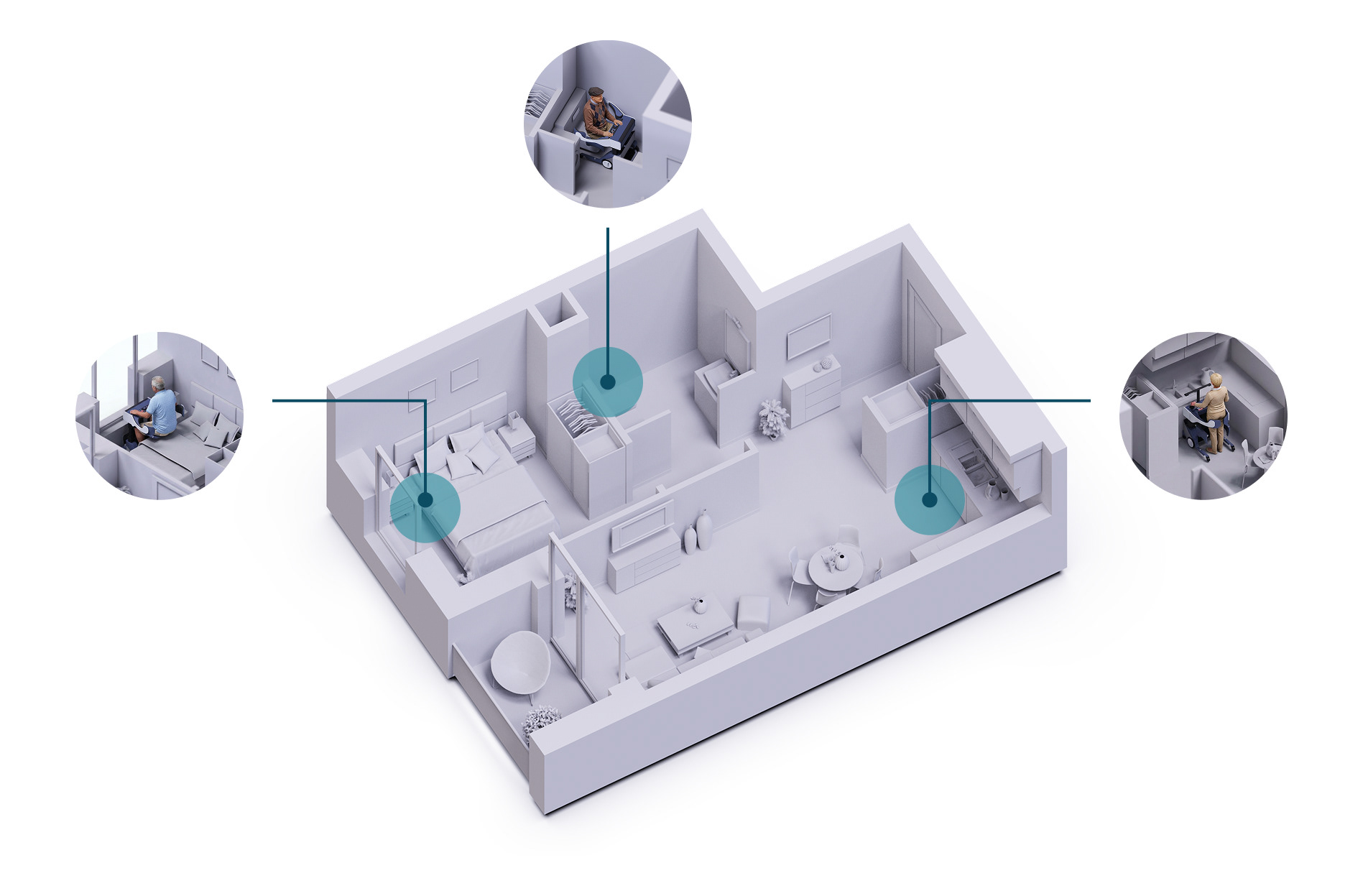
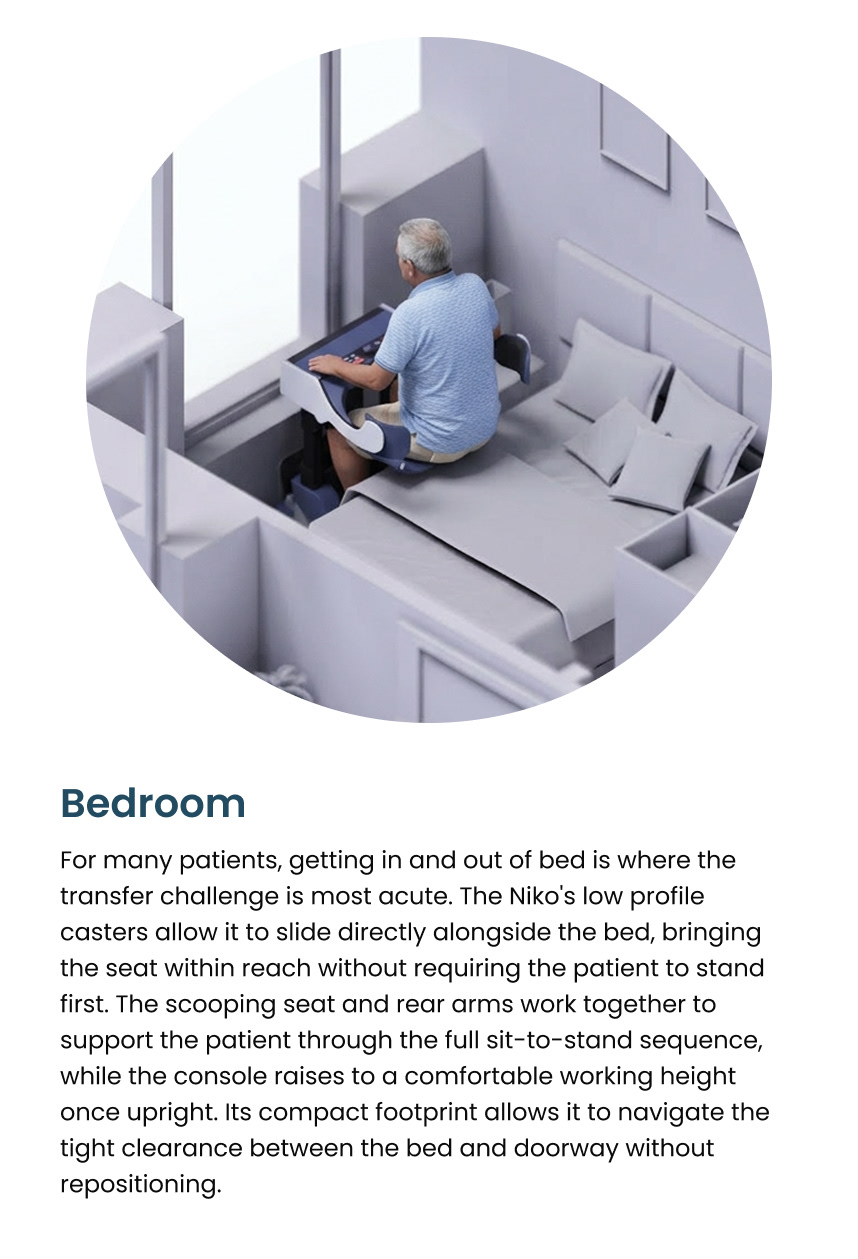
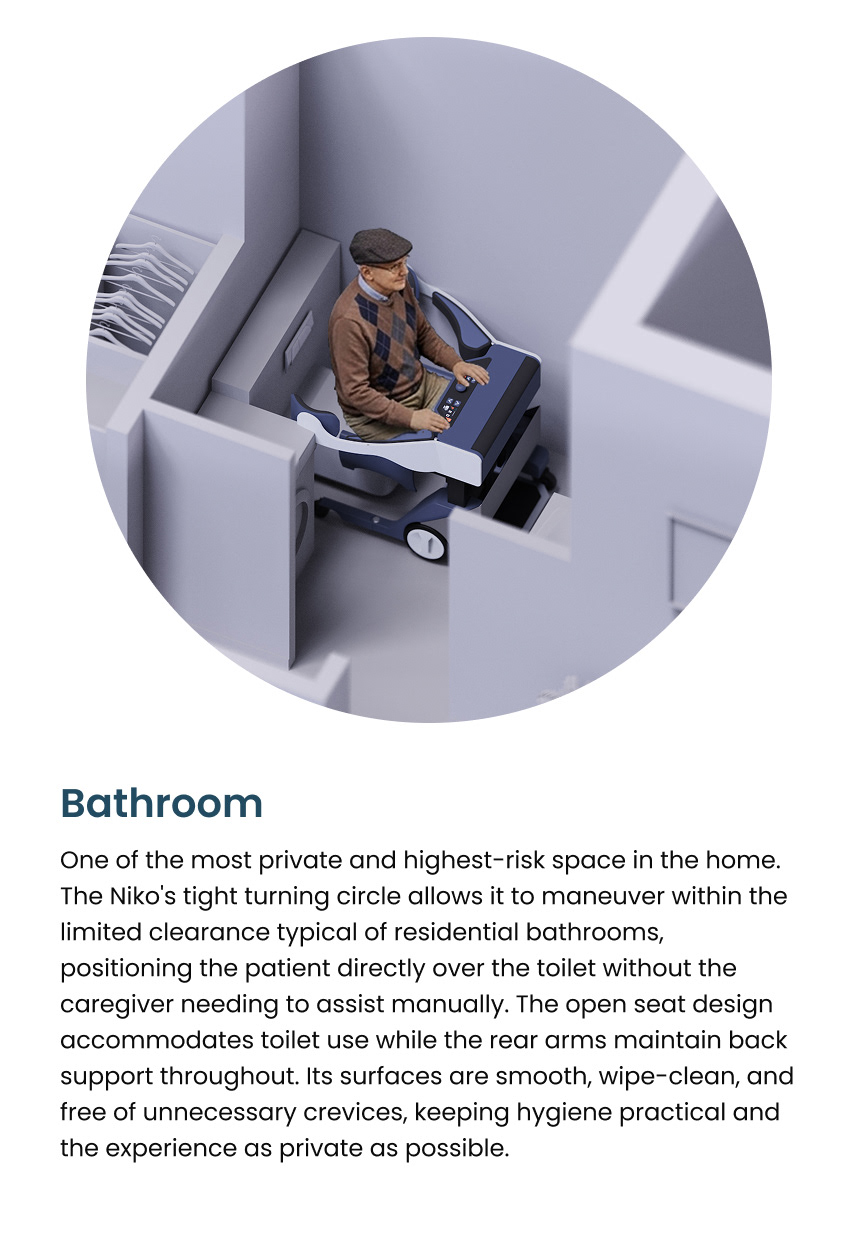
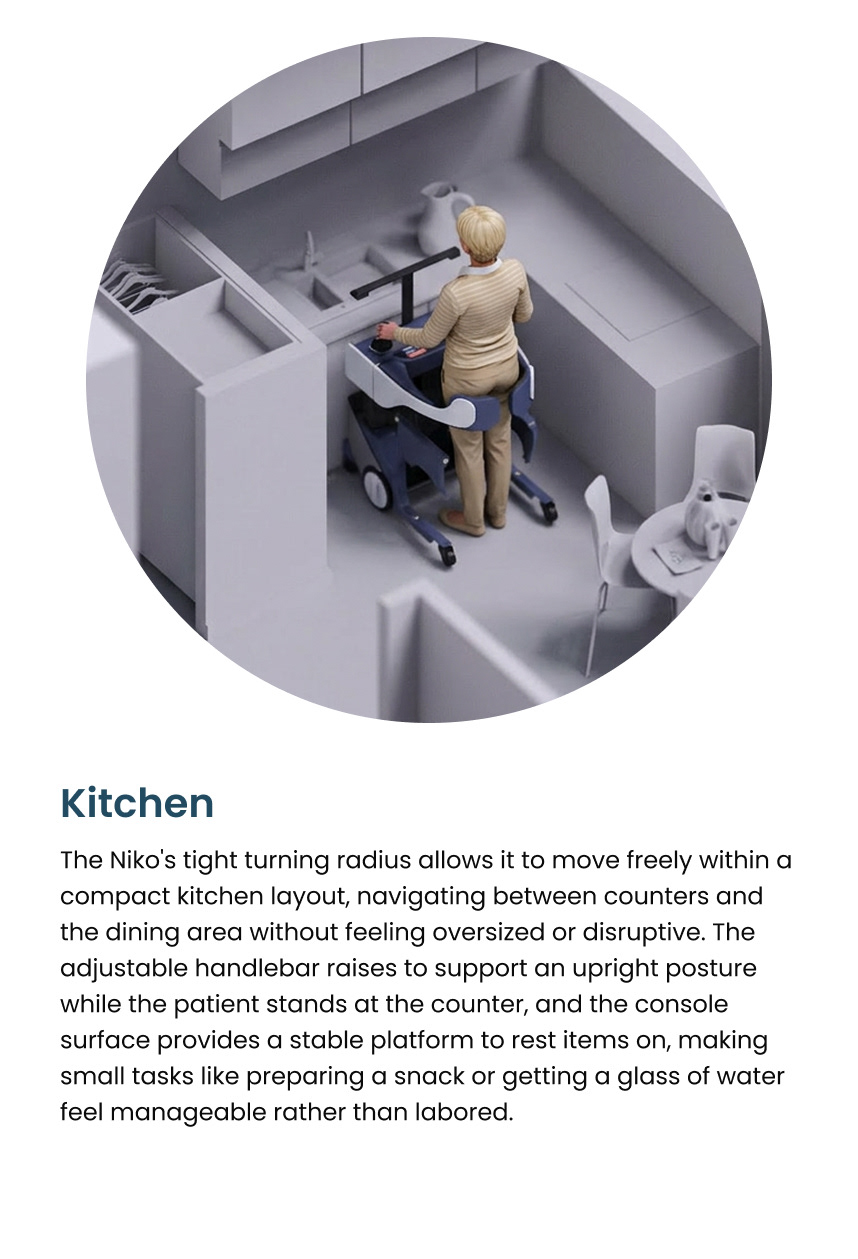
For elderly adults with limited mobility, daily life is defined by a handful of spaces: the bedroom where the day begins, the bathroom where personal care happens, and the kitchen where small tasks still matter. Each of these spaces presents its own physical demands, and at the center of nearly all of them is the same challenge of having to getting up from a seated position. The act of transferring from a bed, a chair, or a toilet requires coordinated muscle engagement, balance, and confidence that diminishes significantly with age or disability.
Transforming Mobility
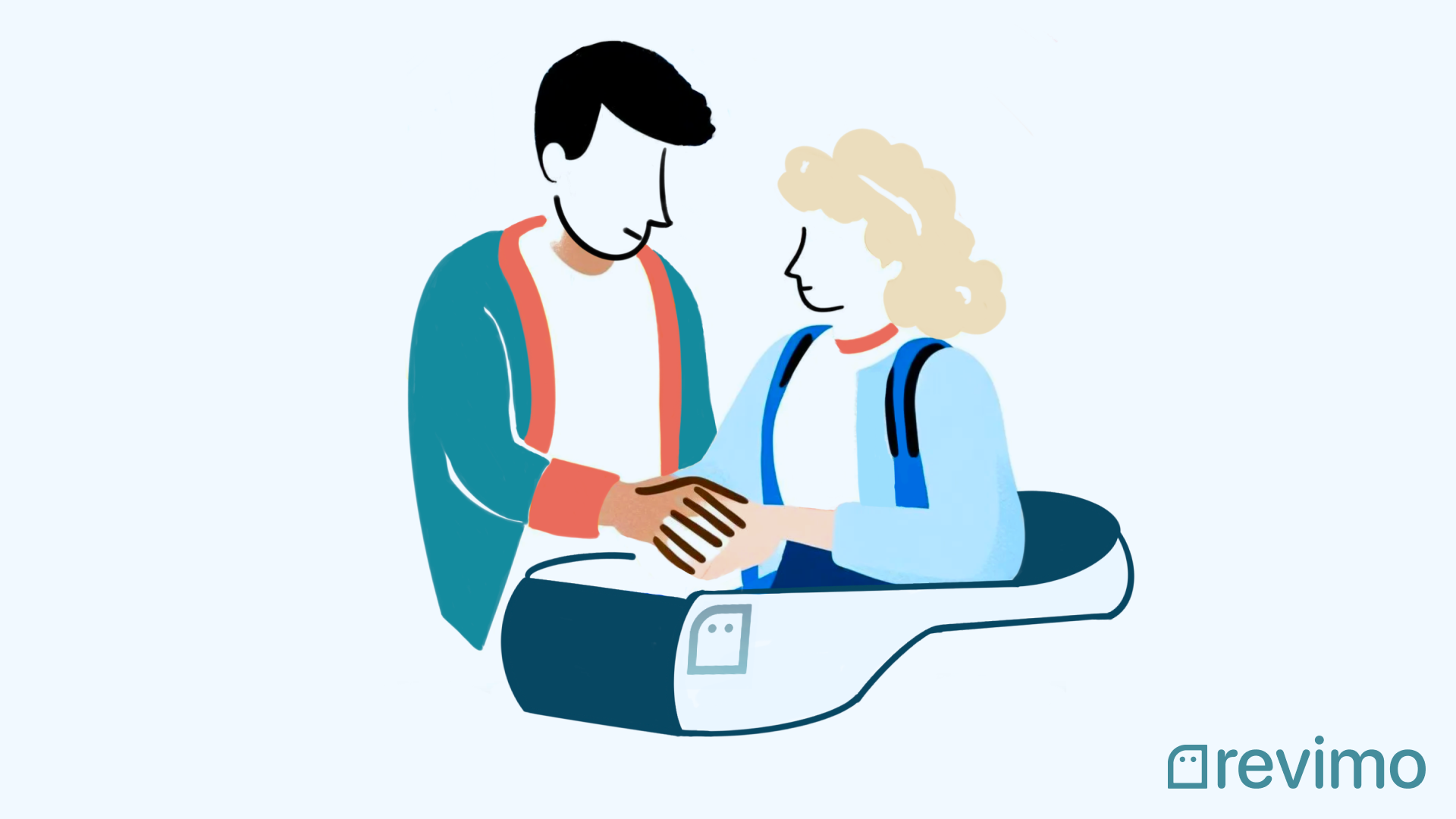
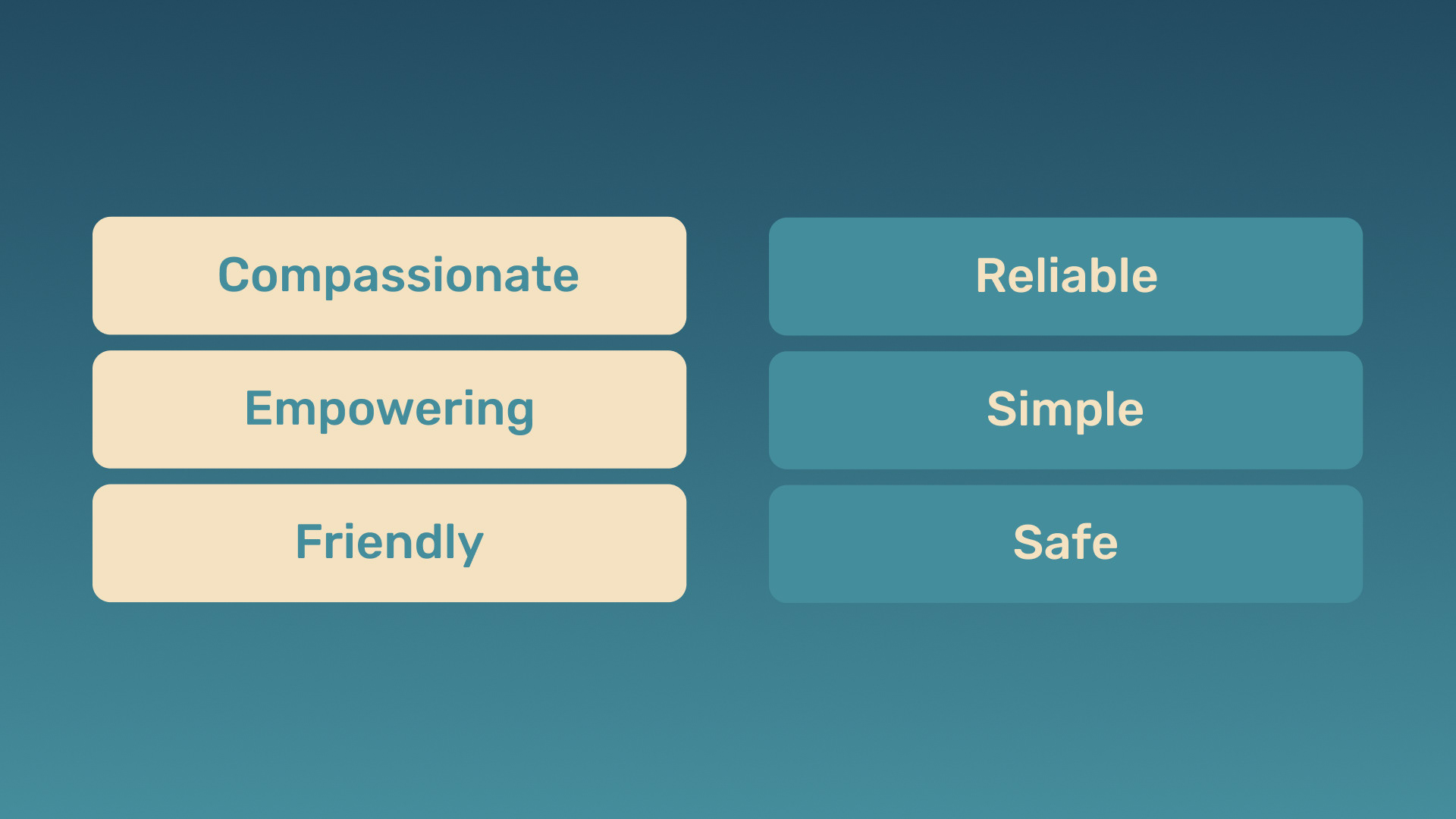
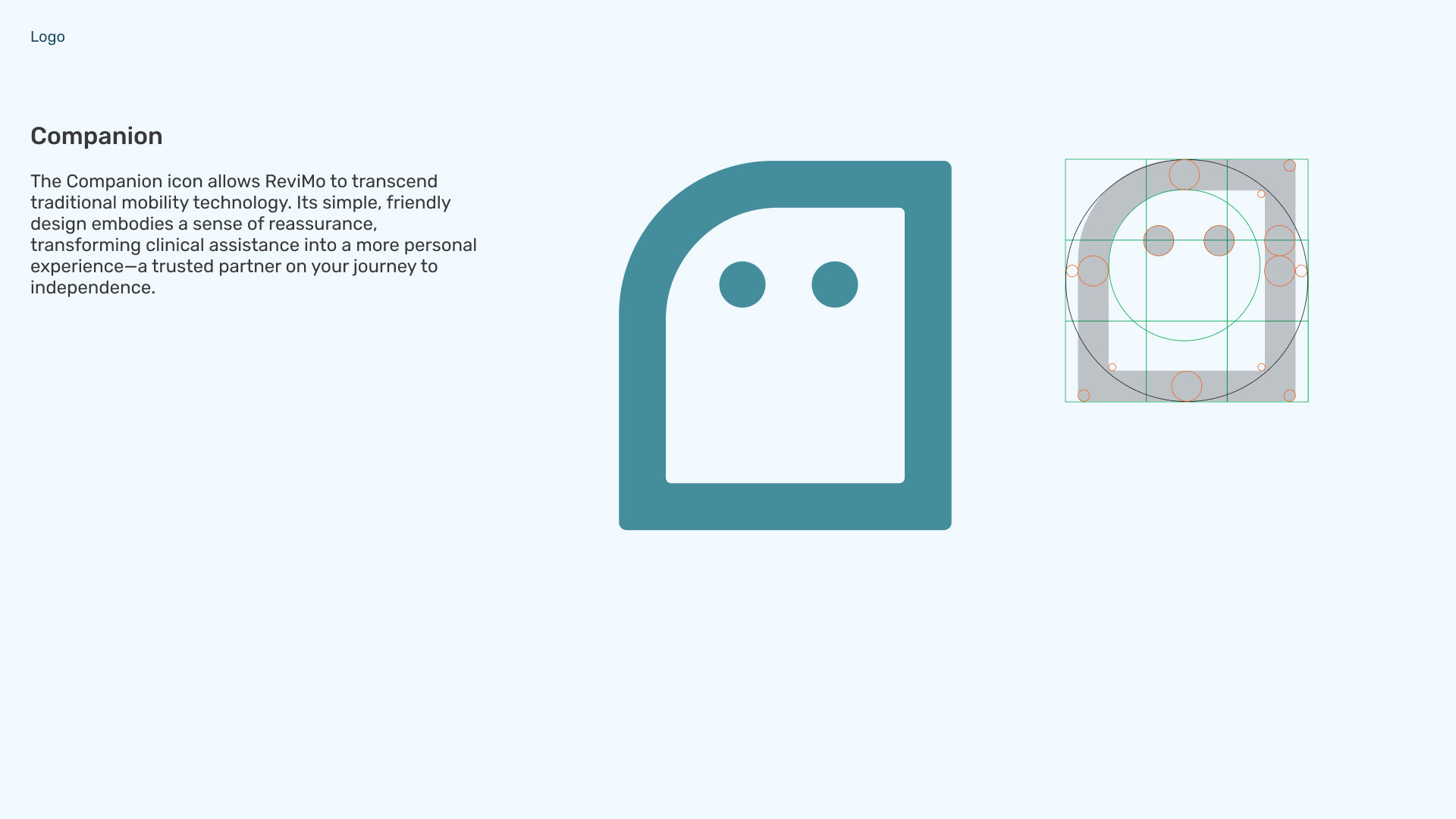
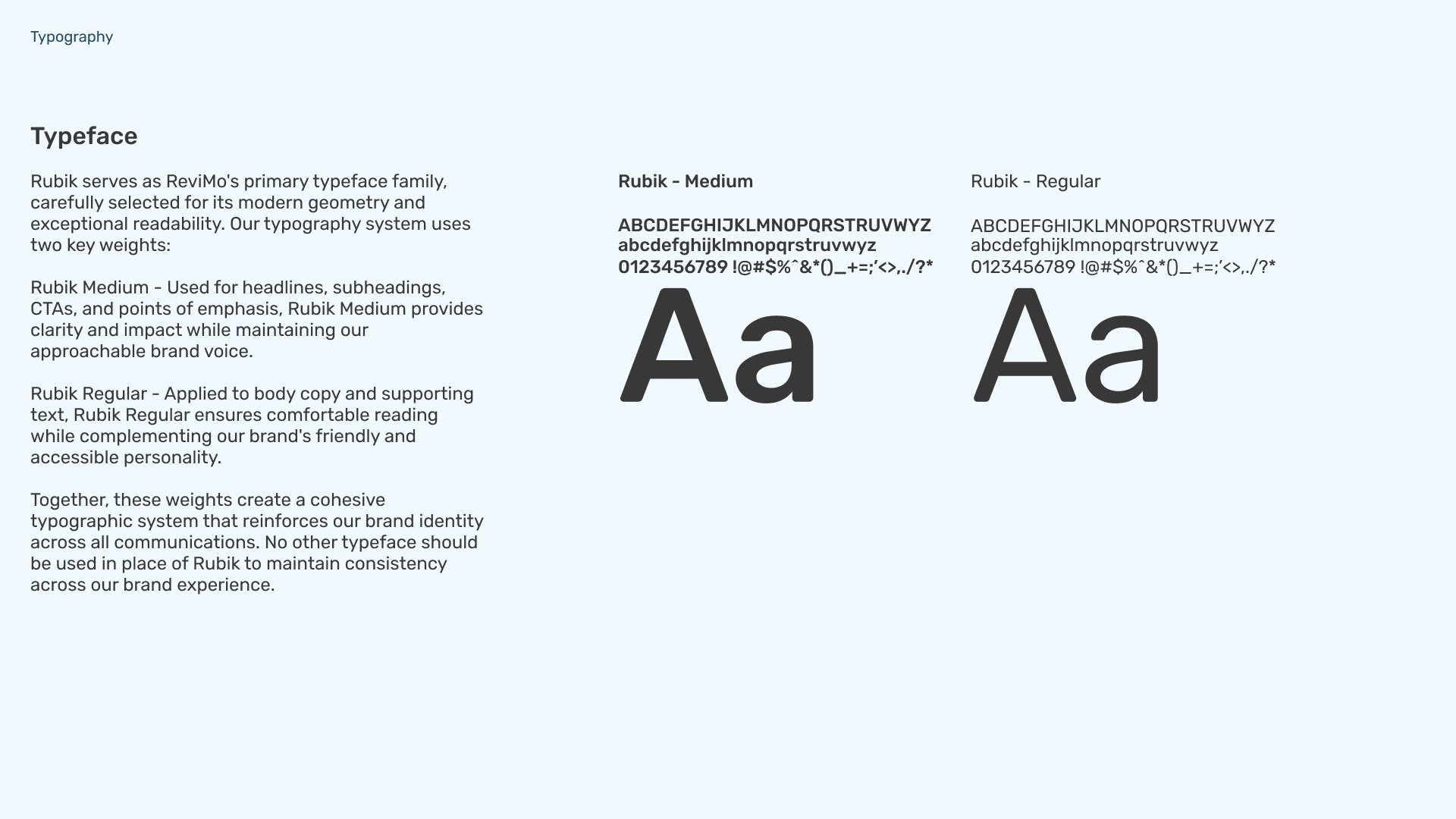
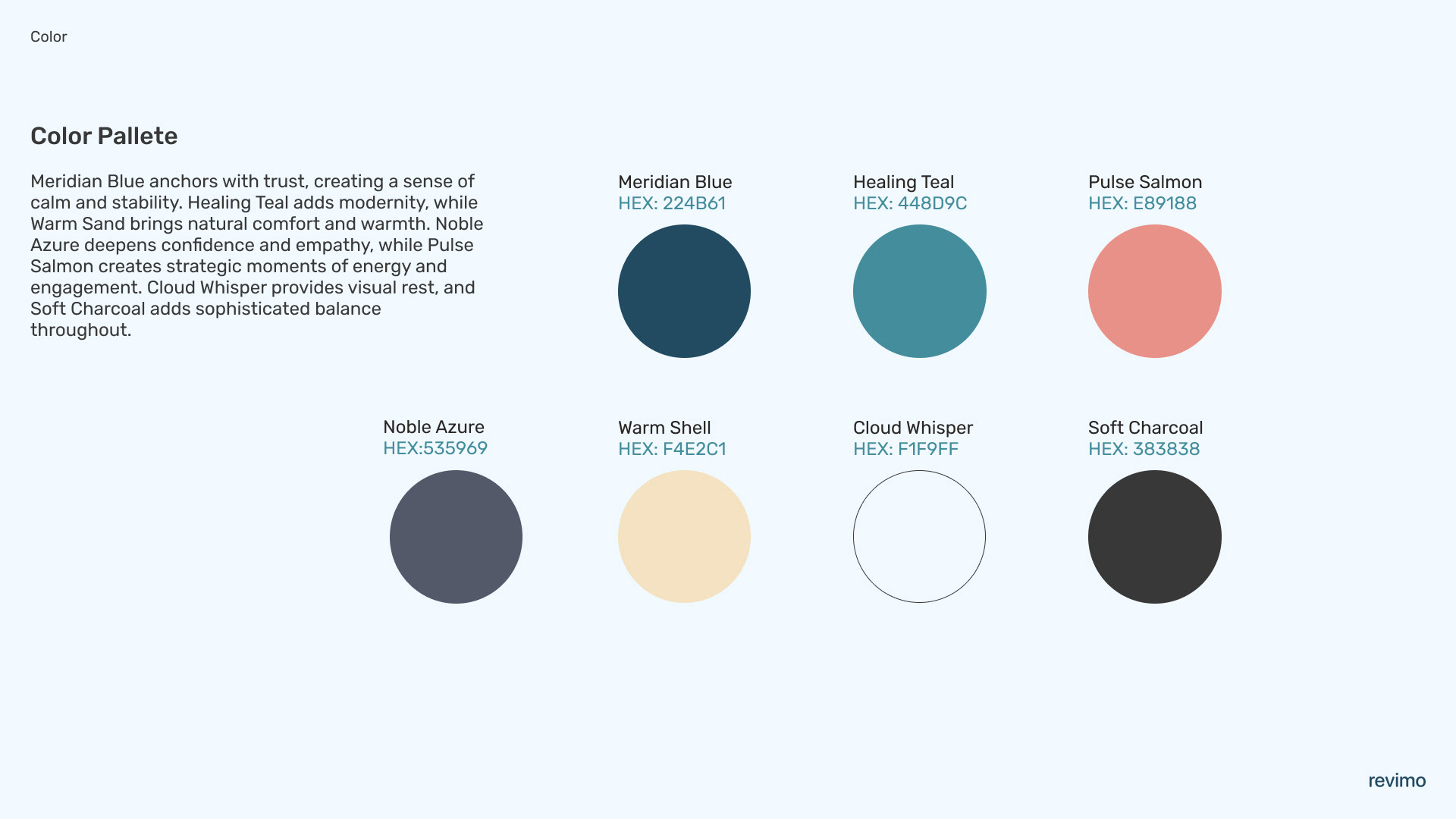
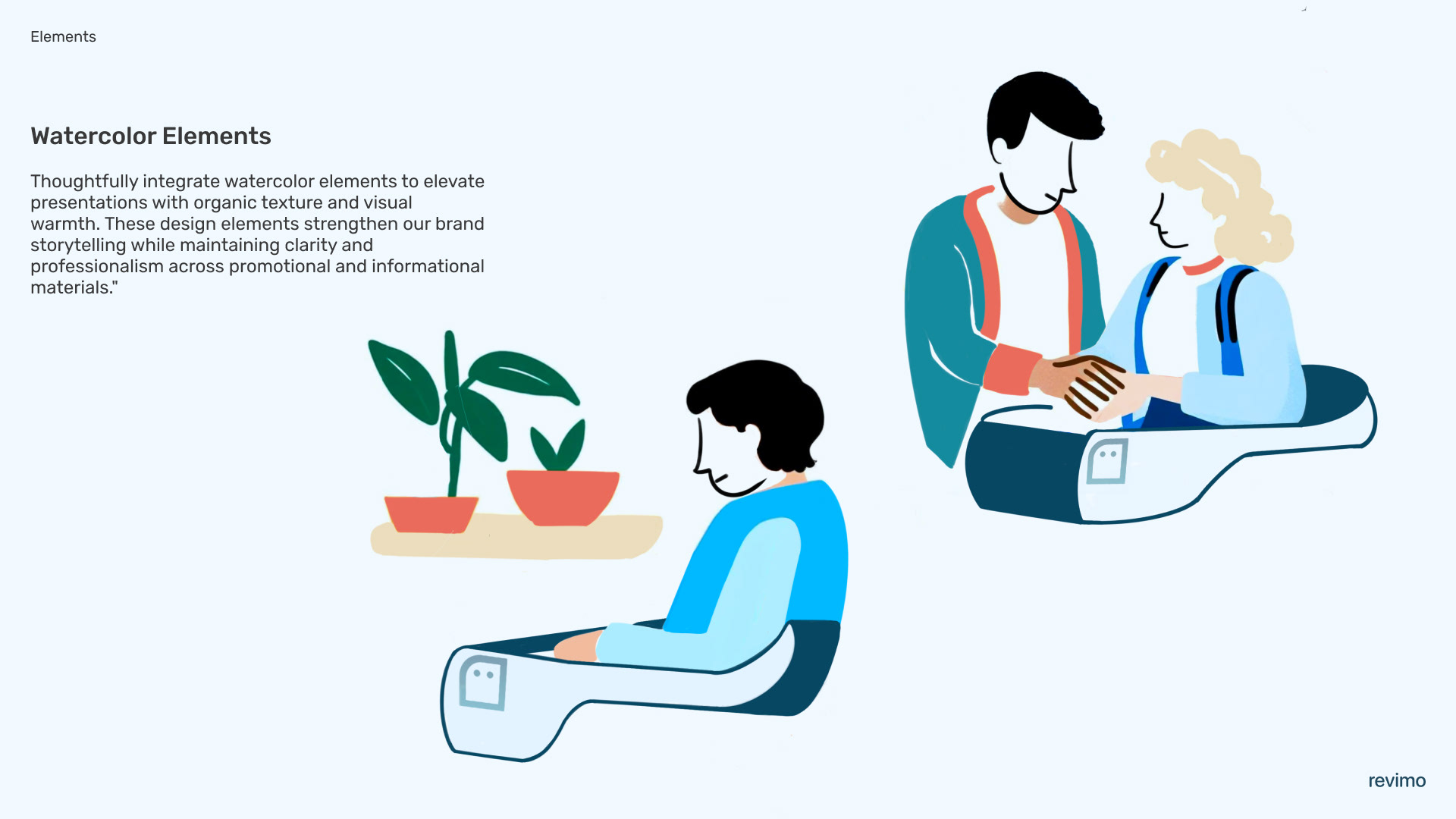
General Populace collaborated with ReviMo to create a strong brand identity for an innovative patient transfer device, emphasizing reliability, safety, and intuitive controls. By leveraging user insights and strategic design principles, our partnership focused on developing a brand that conveys trust, ease of use, and empowerment. Establishing a brand that balances medical-grade reliability with a warm, approachable aesthetic posed a unique challenge. The goal was to move beyond the clinical look of traditional medical equipment and instead create a brand that feels compassionate, empowering, and friendly. Every design decision, from color and typography to messaging, was carefully crafted to reinforce the device’s intuitive functionality and reassuring presence.